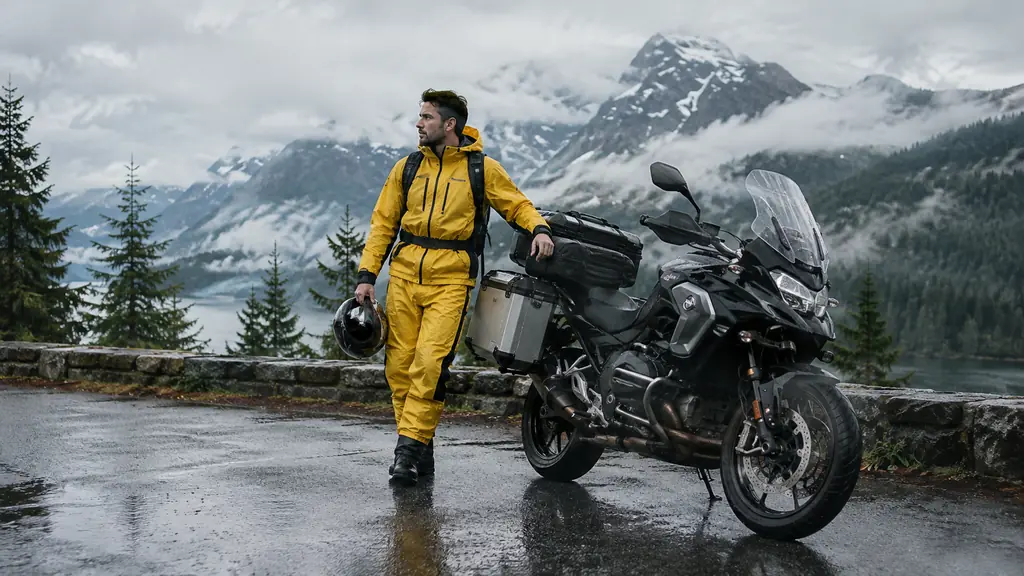
It was 6:40 in the morning, 39 degrees, and the rain was coming down hard enough that the pavement on Highway 97 looked like a black mirror. I had a 90-minute run into Bend ahead of me and a Nelson-Rigg Stormrider rain suit in the top case. I pulled over at the gravel lot outside town, put it on the way I always do, and rode the whole way in dry clothes. That is the whole point of this article. Riding in the rain is not about being tough. It is about having a setup you trust and knowing how to use it before the first drop falls.
I am Ray Holloway. I live outside Bend, Oregon, I ride a 2017 Gold Wing, and I put about 8,000 miles a year on it, most of them on Central Oregon highways and mountain passes. Rain is not a rare event here. It is a fact of life from October through June. Over the years I have been soaked, chilled, and once genuinely worried about hypothermia on a mountain pass. The Nelson-Rigg Stormrider is the rain suit I have settled on, and this is the exact routine I use to make it work.
The Rain Suit I Trust on the Cascades
The Nelson-Rigg Stormrider is the suit I reach for when the forecast turns. Waterproof, breathable, with sealed seams and a fit that goes over regular riding gear. See today's price on Amazon before your next wet ride.
Amazon Check Today's Price on Amazon →Step 1: Size It to Fit Over Your Riding Gear, Not Your Skin
The single biggest mistake I see at rallies and gas stops is a rain suit that fits like a wetsuit. If you buy your normal jacket size, it will bind at the shoulders, ride up at the waist, and pull at the crotch the moment you reach for the bars. A rain suit has to fit over everything you are already wearing: riding jacket, armor, maybe a base layer or heated liner underneath. That is why the Stormrider comes in sizes that run generous. My regular jacket is a large. My Stormrider is an XXL, and it is exactly right.
When you try it on, do it with your full riding kit on, not a t-shirt. Sit on the bike in the garage. Reach for the bars, look over your shoulder like you are changing lanes, and bend your knees like you are moving your feet to the pegs. If the suit binds at the back of the neck, at the shoulders, or across the thighs, it is too small. If the sleeves do not reach your wrists when your arms are extended, it is too small. The Stormrider's cut is made for this, with room in the shoulders and a long enough torso that the jacket does not ride up when you lean forward.
One more fit note specific to the Nelson-Rigg: the jacket has an adjustable waist and the pants have an elastic waistband with a drawcord. Take the two minutes to set them before you ride. A suit that is snugged down at the waist keeps rain from working its way up under the jacket, and it stops the pants from sagging once they get wet on the outside. I set mine once at the start of the season and leave it.
Step 2: Put It On Before the Rain, Not in the Middle of It
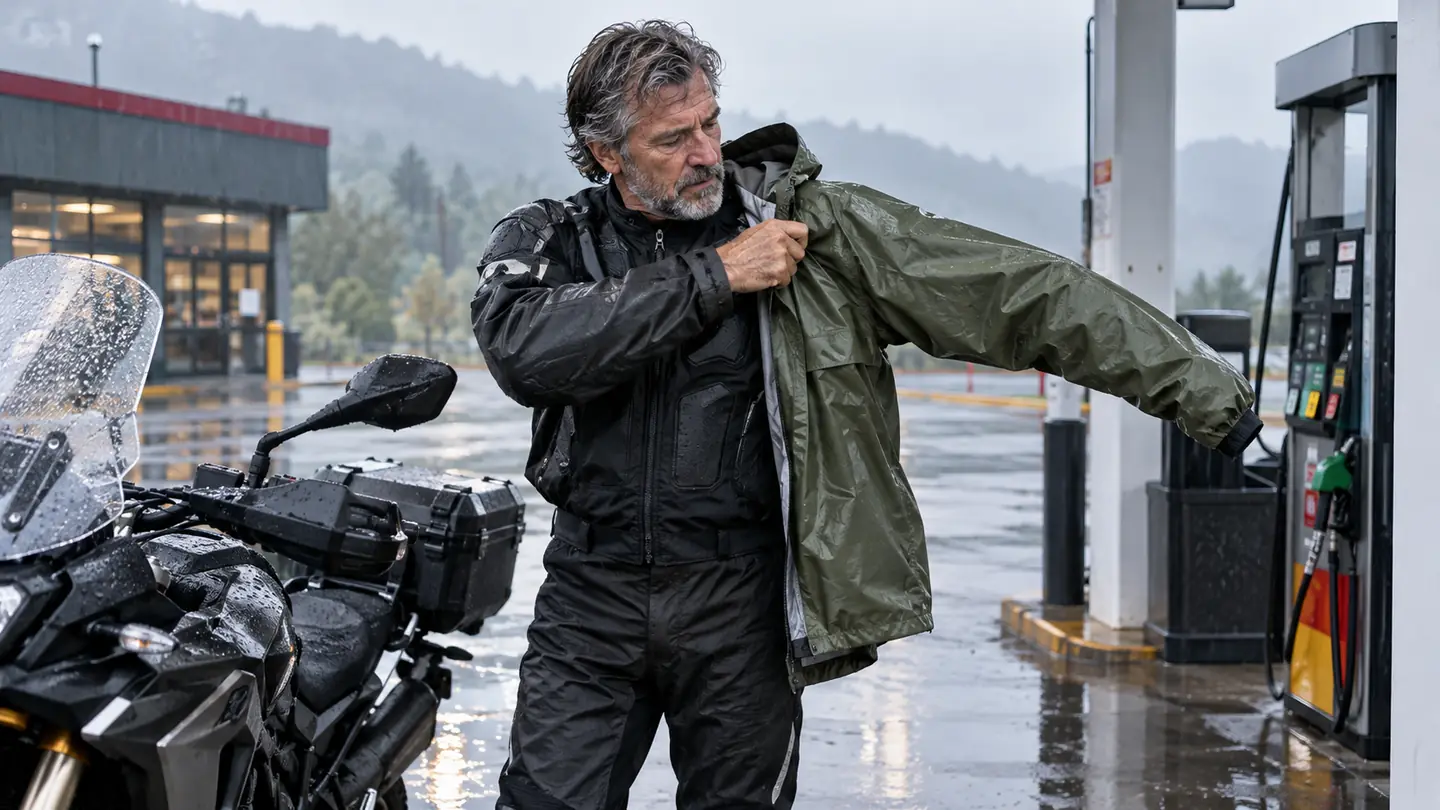
The best time to put on rain gear is when you first suspect you might need it. The second best time is when the first drops hit. The worst time is 20 minutes in, when your jeans are wet, your gloves are soaked, and you are shivering at a pullout trying to get a stiff rainsuit over wet sleeves. I have done that more than once. It is miserable, and it is dangerous, because you rush the job and end up with a twisted zipper and a suit that leaks all day.
My rule is simple. If there is a 40 percent chance of rain and I am heading into the mountains, the suit goes on before I leave. If I am already out and the sky turns, I stop at the first safe place, not the next one. On the Gold Wing, the Stormrider packs small enough that I keep the jacket and pants rolled together in the top case year round, so I never have to decide whether it is worth carrying. It is always there.
The Stormrider has a two-way front zipper with a storm flap behind it, plus a flap over the zipper itself. Take the time to close both. The outer flap is hook-and-loop, and it is the thing that actually stops water from pushing through the zipper teeth at speed. I see riders skip that flap because it takes an extra five seconds. At 65 mph in a downpour, water finds every shortcut you leave open.
Step 3: Set the Vents and Collar So You Do Not Cook or Drown
A rain suit that keeps all the rain out also keeps all your heat in. On a 50-degree day, a fully sealed suit over a riding jacket can get surprisingly warm. On a 40-degree day, that is a feature. On a 60-degree day with a passing shower, it is a problem. The Stormrider handles both because it has vented openings at the back of the jacket and an adjustable cuff system, and the fabric breathes far better than the old PVC suits I started out with.
Here is the setup I use. In cool rain, I close everything, snug the cuffs over my glove gauntlets, and zip the collar up under my chin. The Stormrider jacket has a tall collar with a soft lining, and when it is zipped all the way it keeps cold water from running down the back of your neck. That little trick is worth more than any amount of fancy waterproofing, because a trickle down the spine will ruin a ride faster than wet sleeves ever will.
In warm rain, I leave the collar half open and the wrist cuffs loose enough to let a little air move through the sleeves. The vents let heat escape from your back, and the pants have their own adjustments at the ankles so you can open them up without letting water in. Learn what works for the temperature before you need it. A five-minute test ride in your own driveway tells you more than any spec sheet.
Step 4: Ride the Wet Road Like It Is a Different Road
The rain suit keeps you dry. It does not keep you upright. That part is on you. In the first 30 minutes of rain, the road is at its slickest because oil and grime float on top of the water. That is the time to be gentlest with the throttle, the brakes, and the lean angle. I drop my speed by at least 15 percent in the rain, and more on mountain passes where the surface can be patchy.
Give yourself double the following distance. Brake earlier and smoother, and do your braking while the bike is straight up and down, not in the middle of a corner. Avoid the shiny parts of the lane: painted lines, manhole covers, and the polished center strip are all slicker than the rest of the asphalt. And if the rain is heavy enough that you cannot see, find a safe place to stop and wait it out. I have waited out more than one Cascade downpour under an overpass, and I have never once regretted it.
Visibility matters as much as traction. The Stormrider's high-visibility yellow shell with reflective panels is one of the reasons I chose it. In a gray downpour, a rider in black gear is nearly invisible until they are right on top of you. A rider in yellow stands out. Linda, my wife, rides pillion on our longer trips, and she wears a Stormrider too. When we are rolling through rain, I want both of us visible to every driver who might not be expecting a motorcycle in bad weather.
Step 5: Dry and Care for It the Same Day, Not Next Week
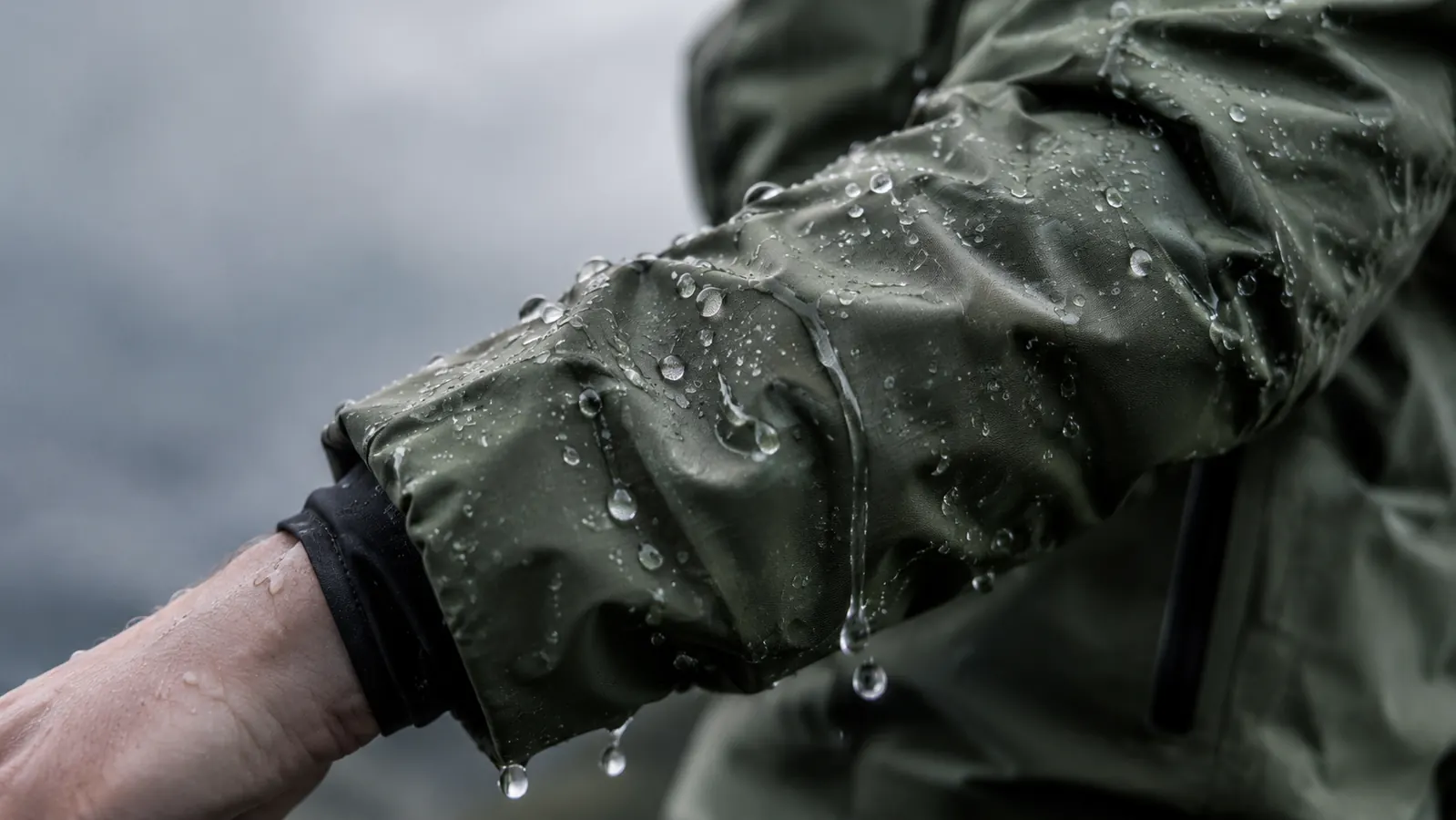
Here is the part most people skip. A rain suit is not maintenance-free. When I get home after a wet ride, I hang the Stormrider jacket and pants on separate hangers in the garage, not balled up in the top case. I wipe down the zippers and hook-and-loop flaps with a dry rag, and I leave the suit to air dry completely. That takes a few hours, and it is the difference between a suit that lasts for years and one that starts to smell and peel after one season.
Do not machine wash it and do not put it near a heater. Heat destroys the coating on waterproof fabric. If the outside gets muddy, I rinse it with a hose and wipe it down. The Nelson-Rigg is a seam-sealed suit, which is exactly what you want for long-term waterproofing, but sealed seams still need the fabric around them to stay in good shape.
Once a year, I check the storm flaps, the zippers, and the elastic at the wrists and ankles. If a zipper starts to feel rough, a little silicone lubricant keeps it moving. If a hook-and-loop flap has picked up lint and stopped gripping, I clean it out with a toothbrush. That ten-minute check in the spring has kept my Stormrider going for several seasons of real use, and it costs nothing.
What Else Helps
The Stormrider is the center of my wet-weather setup, but it is not the whole setup. Here is what I pair with it. A set of waterproof over-gloves keeps my hands dry, because rain runs down the sleeves and into ordinary gloves no matter how good the suit is. I also carry a small microfiber towel in the top case to wipe the inside of my visor and the seat before I get on. For the Gold Wing, I add a rain cover for the luggage when I am on a longer trip. And I keep a spare pair of dry socks in a ziplock bag. Wet feet will end a ride faster than almost anything else, and dry socks in a plastic bag have saved more trips than I can count.
One more thing: tell someone where you are going and what time you expect to be home. On a mountain pass with no cell service, that simple habit is the difference between a minor delay and a serious situation. It is not about being dramatic. It is about treating rain rides with the respect they deserve.
If there is a 40 percent chance of rain and I am heading into the mountains, the suit goes on before I leave.
Ride Dry, Ride Visible, Ride Home
The Nelson-Rigg Stormrider has been my go-to rain suit for years of Central Oregon riding. Waterproof, breathable, and high-visibility. Check today's price on Amazon and set yourself up before the next storm rolls in.
Amazon Check Today's Price on Amazon →