
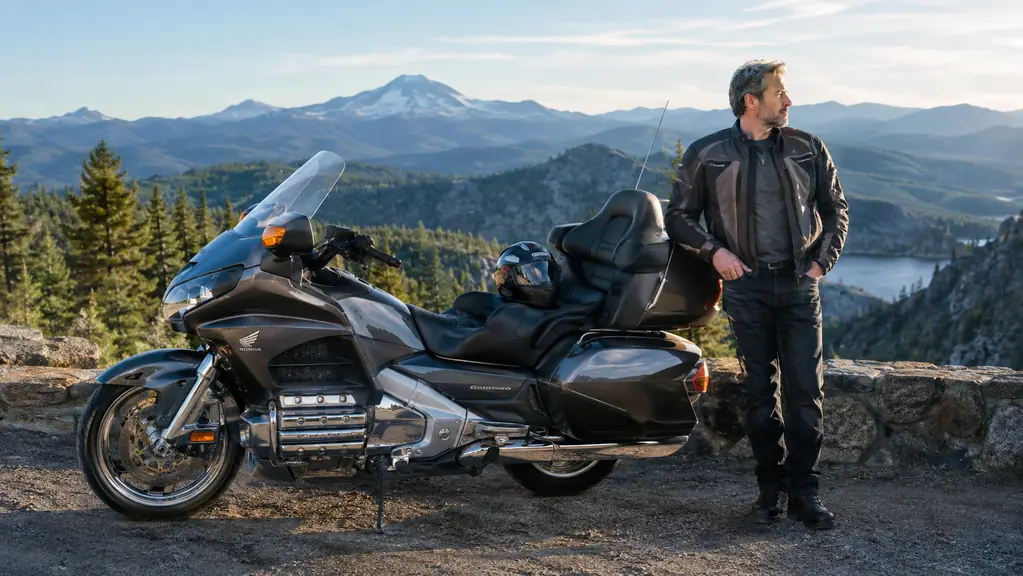
The morning I started this season's notes, I was forty miles into a loop over Santiam Pass and I had to think for a second before I remembered I was wearing a new helmet. That is the highest compliment a full face can get from me. A helmet you notice is a helmet you fight all day. A helmet you forget is doing its job.
I am Ray Holloway, and I ride a 2017 Gold Wing out of Bend, Oregon. I retired from turning wrenches on heavy equipment a few years back, and I put about eight thousand miles a year on the bike, mostly on Central Oregon highways and mountain passes. This season I did over four thousand of those miles in the Bell Qualifier. This is the long version of what I learned.
The Quick Verdict
The Bell Qualifier is the best value full face I have worn in thirty years of riding. It is not the quietest helmet I have owned and it is not the lightest, but it fits true, vents hard, and it took a full season of touring miles without a single latch failing or a single part wearing out. For a rider who wants one honest helmet that does everything well, this is it.
Amazon Check Today's Price →A full season of touring miles, one helmet.
The Bell Qualifier has done every mile of this season with me, from the commute into Bend to the long loop east of the Cascades. If you want the same helmet under your head, check today's price.
Amazon Check Today's Price on Amazon →How I've Used It
The Gold Wing is a forgiving platform for a helmet review. It has a tall windshield, so the wind blast is mostly off your chest, and the fairing does a lot of the weather work. That means the helmet's job is the stuff the bike cannot do: manage the air around my head, keep the shield clear, and stay comfortable for ten-hour days.
This season I wore the Qualifier for the morning commute into Bend a couple of times a week, for day loops over Santiam Pass and down through Sisters, and for one week-long trip with Linda on the back. We went east this year, out through Prineville and up toward the John Day country, and that trip put three consecutive eight-hour days on the helmet. When we got home I checked the liner, the shield mechanism, and the strap hardware the way I used to check a machine after a hard job. Everything was where it was supposed to be. We also did a two-day loop down through Klamath Falls and back up the east side of the Cascades, and the helmet came off only when we stopped for the night.
That matters to me because I am not a collector. I am a rider who buys one good piece of gear and wears it until it wears out. The Qualifier is the first helmet in a long time that I have not felt the urge to replace halfway through a season.
Fit and Comfort on Long Days
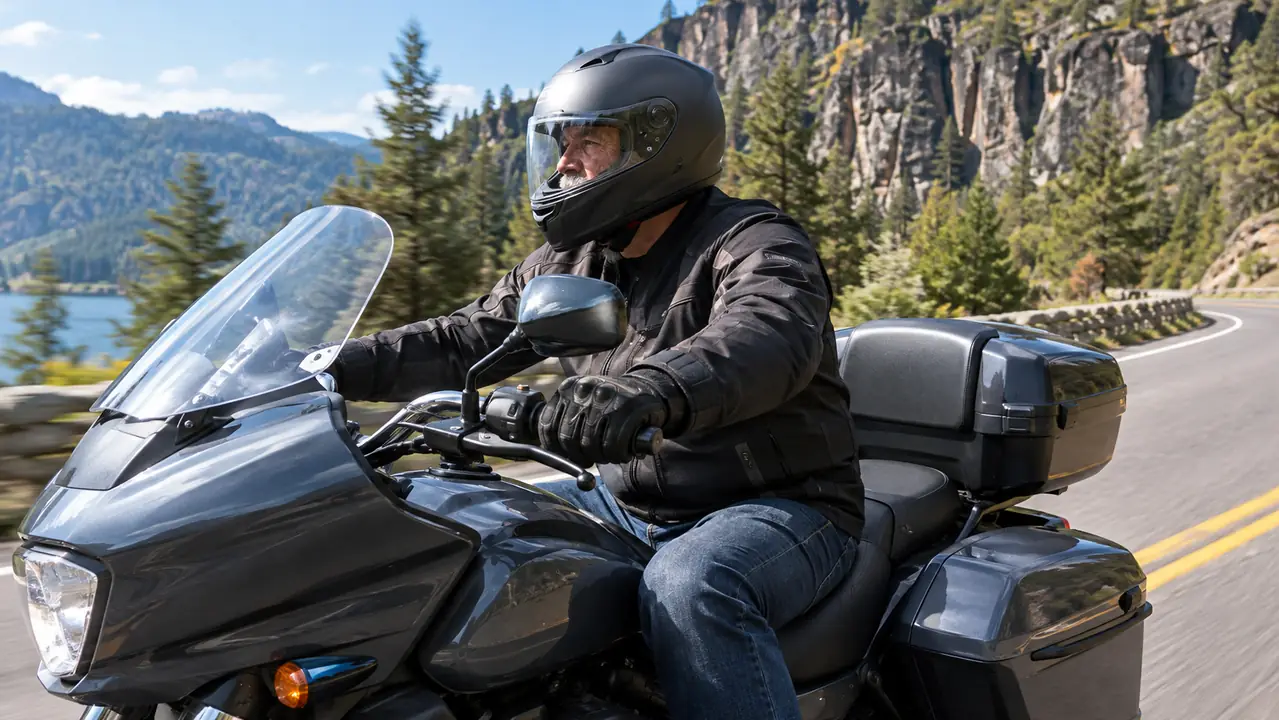
The Qualifier is a polycarbonate shell, and it weighs in the neighborhood of three and a half pounds. That is not the featherweight number you see on a carbon helmet, but on a bike with a fairing it is a non-issue. I have done eight-hour days and the only sore spot I can blame on the helmet is the bridge of my nose after a full day with the chin strap snug, and that is a fit quirk of my own head, not a flaw in the shell. The weight also sits low, which keeps it from feeling top-heavy when I turn my head to check a lane change.
I wear a large in most brands and the large Qualifier fit me out of the box. The cheek pads are firm for the first couple of hundred miles, then they seat in. The liner is plush enough that I have stopped noticing it, which is exactly what I want. Bell also makes the cheek pads in different thicknesses, so if the fit is off you can swap them instead of swapping helmets. If you are not sure how a full face should fit, the fitting guide on this site walks through the whole process, because fit matters more than any spec sheet.
The shell shape works with the Gold Wing's upright seating position. There is no pressure point on the top of my head and the eyeport gives me a wide view of the mirrors. I use an intercom with Linda on long trips, and the speaker pockets in the liner line up where my ears actually are. That is rarer than it should be.
One thing I did not expect is how little the Qualifier changed my neck fatigue on long days. I am 58 years old and I have had my share of stiff shoulders after ten-hour days on older bikes. On the Gold Wing, with the Qualifier's weight sitting low and even, I can count on one hand the days I pulled off the bike and felt the helmet. That is a real, measurable difference, and it is the kind of thing no spec sheet captures.
Ventilation and Weather
Central Oregon gives a helmet a full range of tests in a single season. This year the Qualifier saw 96-degree afternoons coming back from the high desert, and it saw a morning in the mid-30s heading over the pass before sunrise. It handled both without me wishing I had brought a different helmet.
The top vent and the chin bar vent pull real air. On the hot days I could feel the flow across my forehead at highway speed, and the breath deflector kept my shield from fogging when I stopped for fuel. On the cold mornings I closed everything down and the helmet stayed warmer than I expected for something with so much venting. It is not a winter helmet, nobody should pretend it is, but it extended my shoulder season by a few weeks on each end. The chin curtain is worth mentioning too. It cut the breeze coming up under the shield on the cold mornings, and it is one of those details you only notice when it is missing.
Rain is where budget helmets usually show their hand. I rode through one honest squall west of the pass, the kind where you tuck in and stop thinking about anything but the pavement. The shield sealed, the shell stayed dry inside, and the vents did not leak onto my forehead the way vents on two other helmets I have owned did. That one ride told me more than a hundred dry miles could have.
The one weather test I have not thrown at it yet is a full day of freezing rain. Central Oregon winters keep the roads icy enough that I park the Wing when the black ice shows up, so the Qualifier has not had to prove itself in the worst of winter. I am honest about that gap. What I can say is that every weather condition I actually ride in, the helmet has handled without drama.
Noise: The Honest Part
Here is where I stop being a cheerleader. The Qualifier is not a quiet helmet. At 70 miles an hour behind the Gold Wing's windshield there is a steady rush of wind noise that you will hear in the lower part of the spectrum, and on a naked bike it would be louder. I ride with earplugs on anything longer than a fuel stop, and I recommend the same to anybody, no matter which helmet they buy.
I want to be straight about this because a lot of helmet reviews bury it. Every budget helmet has a noise compromise, and the Qualifier's compromise is wind noise. It does not whistle, which I appreciate, it just has a general roar at speed. The Gold Wing's fairing takes the edge off, and my earplugs take the rest. For a rider who already wears plugs, this is a non-issue. For a rider who refuses to wear them, the Qualifier will get old on a long interstate day.
I would rather have honest noise than the fake quiet of a helmet that seals so tight my ears pop. The Qualifier's seal is good, the noise is manageable, and I have done back-to-back eight-hour days without a headache. That is the standard that matters to me. Earplugs are part of my kit on every ride, and they make the Qualifier a non-event on the highway.
I will also say this: the noise level is predictable, and predictable is easier to manage than a helmet that is quiet at 55 and suddenly loud at 65. The Qualifier does not have a speed where it changes character. You know exactly what you are getting at any speed, and on a long trip that consistency matters more than a lower decibel number you would only notice in a parking lot.
The Little Things That Add Up
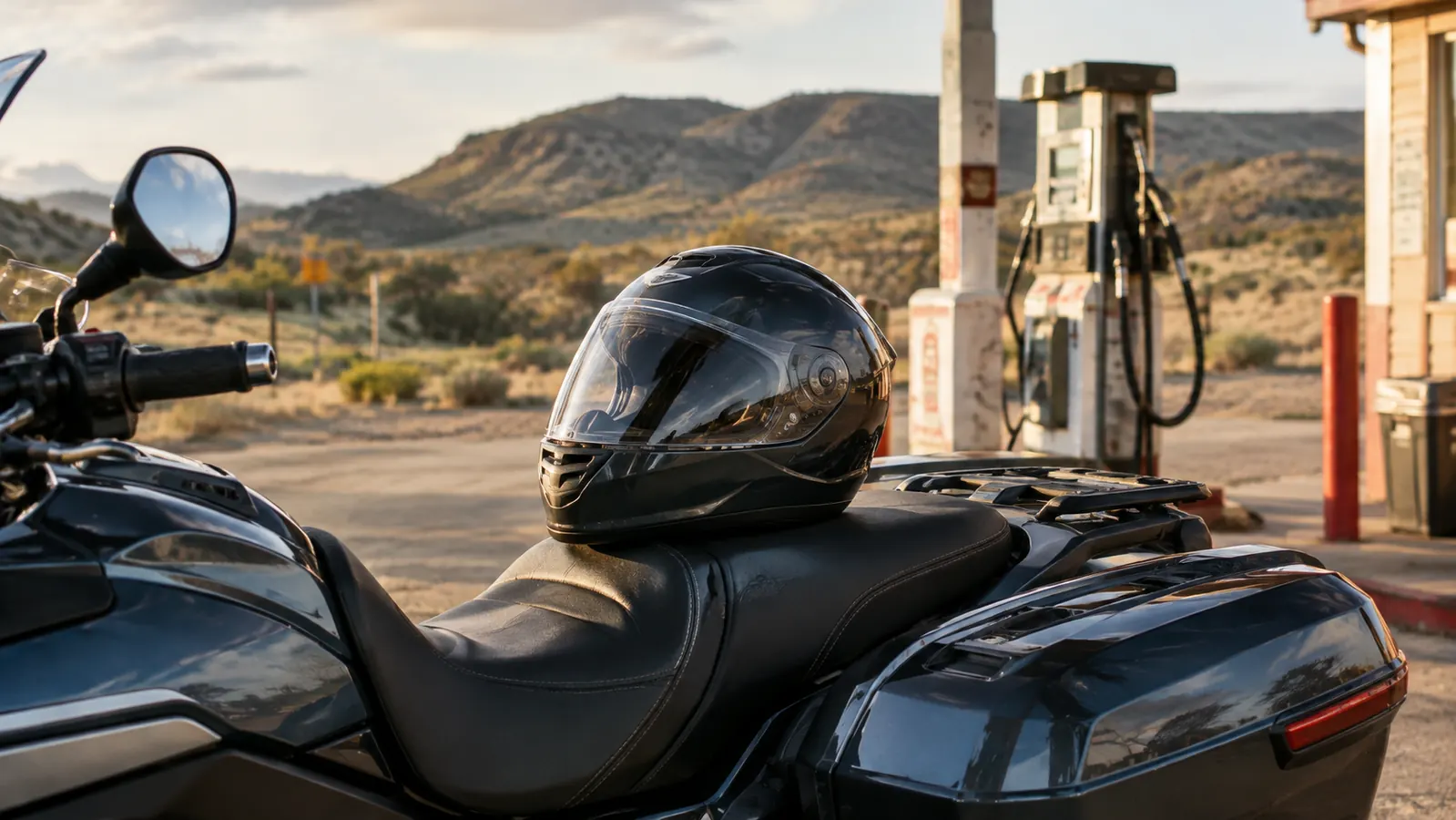
The shield system is worth its own paragraph. The Qualifier's shield swaps in a couple of minutes with no tools, which sounds like a small thing until you have owned a helmet where you needed a screwdriver and a prayer. I run a clear shield for the dark months and a tinted one for summer, and I have swapped them at a gas station more than once when the day turned brighter than the forecast.
The shield also has a positive lock position that has never once let the wind push it open, and the strap hardware is simple. No d-ring fumbling, no plastic parts that feel like they will break the third time you use them. The liner is removable and washable, which matters after a summer of high-desert dust. I washed mine in September and it came out looking like new.
The DOT rating is the part I do not compromise on. There is a longer piece on this site about the reasons a DOT-rated full face is worth it, and the Qualifier carries that rating without a fight. There is also a story on this site about a ride home where the shield did its job when a rock came up off the road, and it is a good reminder that the shield is doing real work. It has the speaker pockets and the general build quality that make it ride above its class. If you are trying to decide between the Qualifier and the HJC i10, the comparison here lays out where each one wins.
The last detail is the one most reviews skip: the helmet has been dropped. Not off a bike, but off the passenger seat in my garage once, onto concrete. It took the hit with nothing but a scuff. I checked the shell carefully, found no damage, and made the call to keep riding it. I would not fault anyone for replacing a helmet after any drop, but this one did not crack or deform, and I am comfortable with how it held up.
What I Liked
- True-to-size fit with replaceable cheek pads
- Strong airflow from the top and chin bar vents
- No-tool shield swaps in a couple of minutes
- Speaker pockets that line up where ears actually are
- DOT rated without feeling like a compromise
- Removable, washable liner
Where It Falls Short
- Noticeable wind noise at highway speed
- Not the lightest full face on the shelf
- Cheek pads run firm for the first couple hundred miles
- A few small trim pieces feel budget-level
I have put over 4,000 miles on this helmet in one season, in 96-degree heat and a squall west of the pass, and it has never once made me wish I had spent more.
Who This Is For
Buy the Qualifier if you ride a touring bike or a standard, if you wear earplugs on the highway, and if you want one helmet that does everything competently without making you think about it. It is ideal for the rider who is newer to full-face helmets and wants to learn what they actually need before spending serious money. It is also ideal for the experienced rider who simply refuses to chase a carbon shell they will never feel.
If you commute, the quick shield swap and the washable liner earn their keep. If you tour, the comfort over eight-hour days is real. If you ride with a passenger, the speaker pockets keep you talking without raising your voice into the wind. For all of those jobs, the Qualifier is the helmet I reach for.
Who Should Skip It
Skip the Qualifier if wind noise is your number one complaint about riding. On a naked bike, or for a rider who will not wear earplugs, the rush at 70 miles an hour will wear on you. This is the honest tradeoff at this end of the market, and pretending otherwise would be doing you a disservice.
Also skip it if you are chasing every ounce. The Qualifier is not heavy, but it is not a featherweight, and riders who want the lightest option on the market should keep shopping. And if you want a built-in sun visor, the base Qualifier does not have one; that is the DLX version's job. For those riders, the honest review covers the small annoyances in detail. For everyone else, this is a helmet I would buy again tomorrow. And if you spend most of your riding on a bike without a windshield, the noise will be the first thing you notice about the Qualifier, not the last.
One helmet did 4,000 honest miles this season.
The Bell Qualifier earned its place on my shelf. If you want the same fit, the same vents, and the same no-drama performance, check today's price on Amazon.
Amazon Check Today's Price on Amazon →