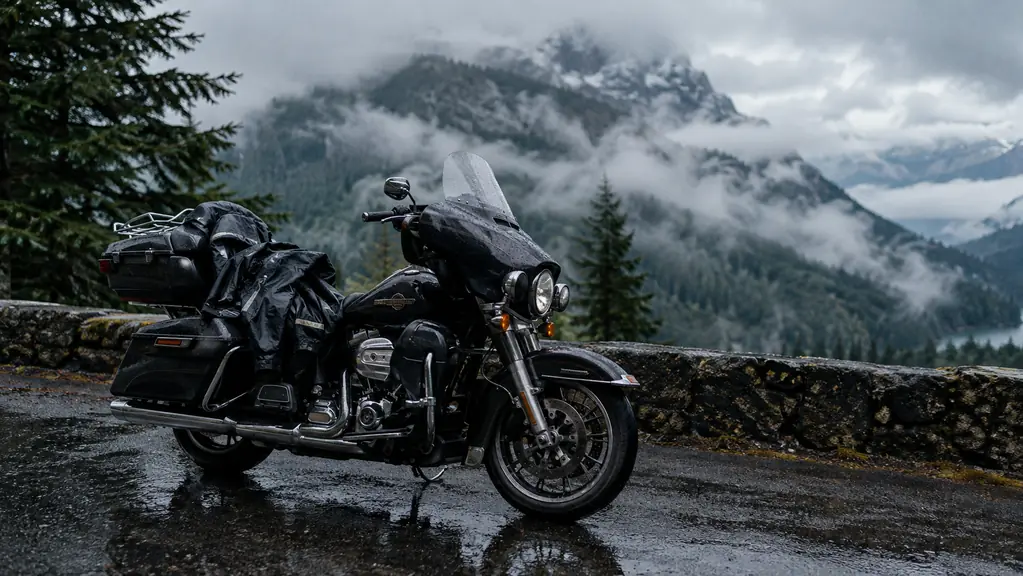
If you ride a Gold Wing out of Bend, Oregon, you learn to read the sky before you read the map. I am Ray Holloway, 58, retired heavy-equipment mechanic, and I put about 8,000 miles a year on my 2017 Honda Gold Wing, most of it on Central Oregon highways and mountain passes. Rain is not a question of if. It is a question of when, and how far you are from home when it starts. So when riders ask me about rain gear, they are really asking one thing: which suit do I trust to keep me dry for a full day in the saddle, not just a quick dash to the next exit. I have spent real miles in both the Nelson-Rigg Stormrider and the Frogg Toggs Ultra-Lite2, and the honest answer is that they are built for two different jobs. For touring, the Nelson-Rigg Stormrider is the one I pack.
The short version: the Stormrider is a purpose-built motorcycle rain suit with a proper storm flap, sealed seams, and a cut that actually fits over riding boots and a helmet. The Ultra-Lite2 is a featherweight emergency shell that folds down to almost nothing and costs a fraction of the price. Both will keep you dry in a shower. Only one of them is something I would trust for a week on the road, and it is not the one that packs smaller.
Pack the rain suit that actually survives a touring season
The Nelson-Rigg Stormrider is built for riders who spend hours in the wet, not minutes. Check today's price on Amazon and see why it is the suit I keep in the top case.
Amazon Check Today's Price on Amazon →How I Tested Both Suits
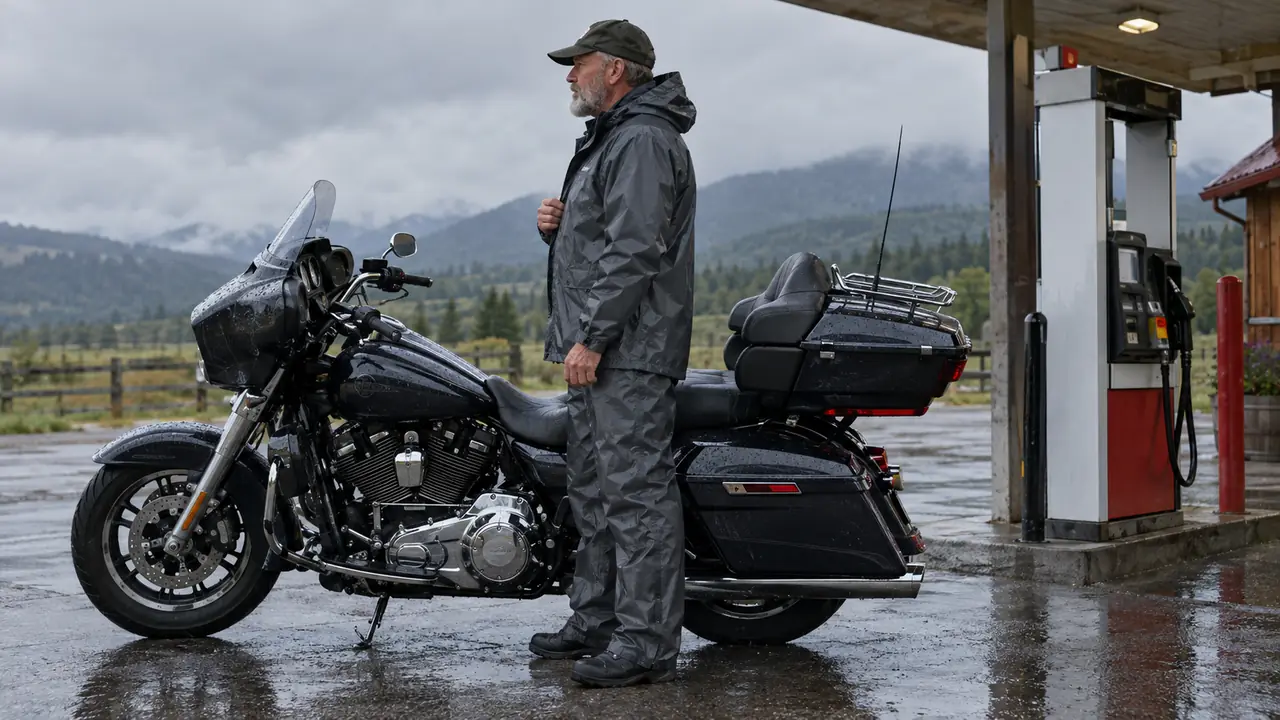
I did not test these suits in a parking lot with a garden hose. I wore them on the bike, in the rain, on the roads I ride every week. The Stormrider went with me on a three-day loop through the Cascades in late May, when the rain started at Santiam Pass and did not let up until I was back in Bend. That stretch included a full afternoon of steady rain on Highway 126, then a cold, wet morning over McKenzie Pass where the temperature sat at 44 degrees and the water never stopped. I left Bend at 6:40 that morning with the temperature already dropping, and by the time I crossed the pass the rain was coming in sideways off the trees. The Frogg Toggs went on a pair of day rides, including one where I got caught in a steady drizzle on Highway 97 and another where a thunderstorm rolled in fast east of the mountains, south of Prineville, with about twenty minutes of warning. I pulled over under a gas station awning to put it on, and I was glad I had it, but I was also glad I was only forty minutes from home.
I judged both suits on the things that matter when you are 200 miles from home: does the water stay out, does the suit stay on, does it pack small enough to live on the bike, and does it survive being stuffed in a bag a hundred times. I also paid attention to the small stuff, like whether the cuffs stay put when you are reaching for the grips and whether the hood is actually usable under a helmet or just decorative. On the Stormrider I also checked the seams after every ride, because a suit that leaks at the shoulder is worse than no suit at all, since you do not find out until you are already soaked. I ran a finger along every sealed seam after the McKenzie Pass morning, and the tape was still down flat with no lifting at the stress points.
Where Nelson-Rigg Wins
The Stormrider wins the only test that matters for touring: it keeps you dry when the rain is serious. The jacket has a storm flap that covers the main zipper, and the seams are sealed, which is the difference between a suit that shrugs off a shower and a suit that slowly soaks you through at the shoulders after an hour. The cut is made for riding, not for standing in a parking lot. The sleeves are long enough to reach the grips without pulling up at the wrist, the legs fit over my riding boots without bunching, and the whole thing moves with you instead of fighting you. On the McKenzie Pass morning, I rode for two and a half hours in steady rain and my base layer stayed dry except for sweat, which is exactly what I want from a rain suit. I remember checking the inside of the jacket at the Sisters gas stop and finding the liner completely dry, then doing the same check on the Frogg Toggs after the Highway 97 ride and finding a damp stripe down the chest.
It also holds up to real use. I have packed the Stormrider in my top case for two seasons now, and the fabric still looks like the day I bought it. The zippers have not snagged, the velcro still holds, and the reflective panels are still bright. That is the part that is hard to see in a product photo: a rain suit only works if it is still a rain suit the tenth time you pull it out of the bag. The Nelson-Rigg is. I have also washed it twice, once after a dusty ride through a construction zone on Highway 20, and it came out of the machine with the seams intact and the velcro still grabbing. The second wash was after a week of afternoon thunderstorms in July, and the suit dried overnight on a hanger in the garage with no stiffness in the fabric.
Where Frogg Toggs Wins
I am not going to pretend the Frogg Toggs Ultra-Lite2 is a bad product, because it is not. It wins on the two things that matter most to a certain kind of rider: weight and price. The whole suit folds down to about the size of a water bottle and weighs almost nothing, which means you can carry it on a bike that has no top case and no saddlebags. If you ride a sport bike, or if you just want something to throw in a backpack in case the sky opens up, the Ultra-Lite2 is a perfectly reasonable choice. I carried mine in a tail bag on a weekend trip to the Oregon coast and forgot it was there until I needed it. When I did need it, on a damp afternoon in Lincoln City, it went on over my jacket in about two minutes and kept the worst of the mist off.
It is also a fraction of the price of the Stormrider, which matters if you are buying rain gear as an insurance policy rather than a piece of touring kit. The Ultra-Lite2 is the suit you buy when you want to be able to say you have rain gear, not the suit you buy when you plan to ride through a storm. For that job, it is genuinely hard to beat. But I want to be clear about what that job is: it is the suit that gets you to the next exit, not the suit that gets you to the next state. On the day I wore it through the thunderstorm south of Prineville, it did exactly what I asked of it, and I did not ask it to do anything more.
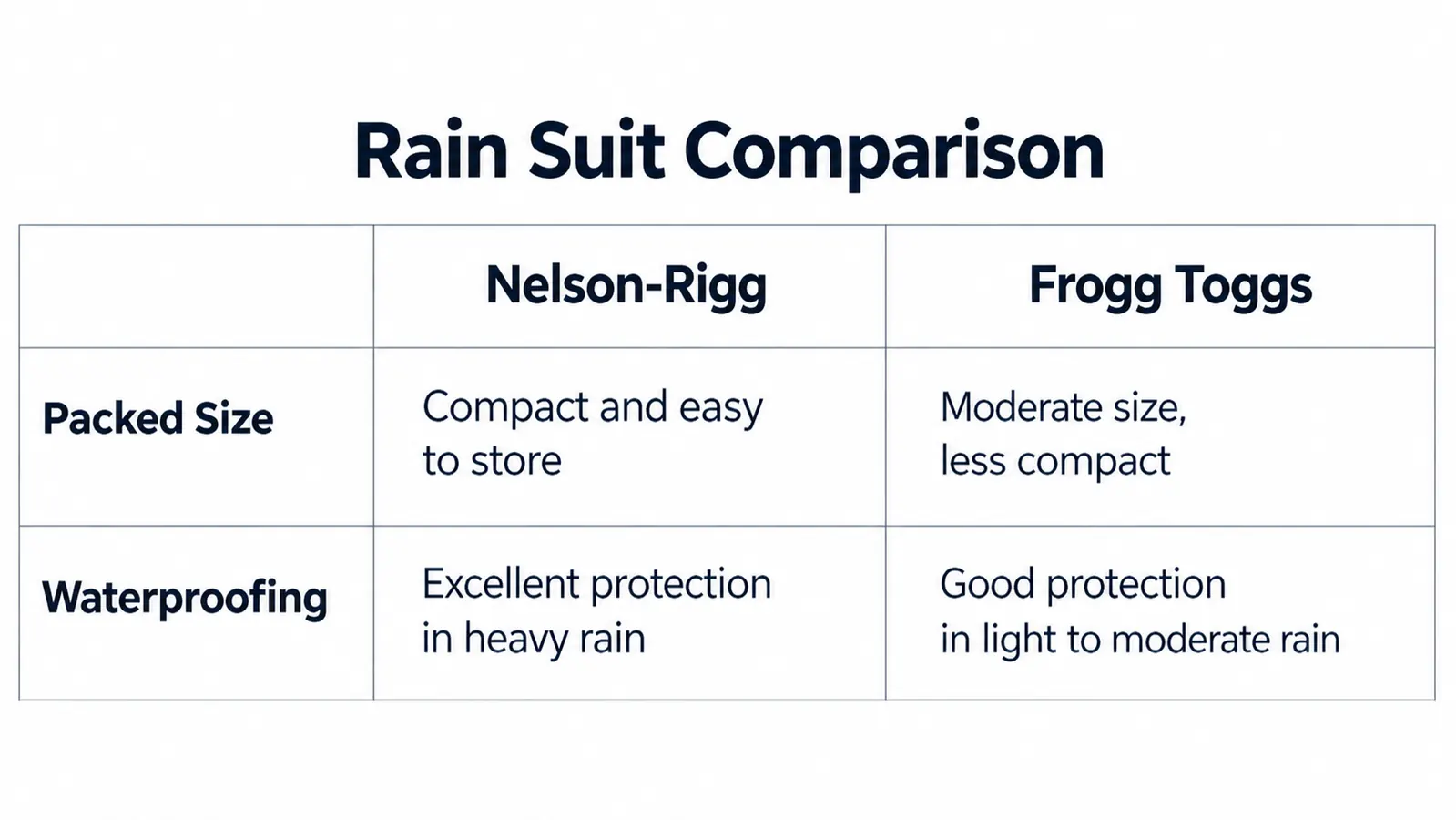
| Nelson-Rigg Stormrider | Frogg Toggs Ultra-Lite2 | |
|---|---|---|
| Waterproofing | Sealed seams, storm flap over the main zipper, built for hours of steady rain | Lightweight shell that handles a shower but soaks through in sustained rain |
| Packed size | Bulkier, lives in a top case or saddlebag | Folds down to about the size of a water bottle |
| Weight | Heavier, feels like real gear | Featherweight, easy to carry anywhere |
| Riding cut | Long sleeves, room for boots, moves with you on the bike | Boxy fit, sleeves ride up when you reach for the grips |
| Durability | Two seasons of packing and unpacking, still looks new | Thin fabric that needs careful handling |
| Best for | Touring, commuting, all-day rides in the wet | Emergency backup, short hops, riders with no storage |
The Stormrider Details That Matter on a Long Ride
The things that make the Nelson-Rigg Stormrider a touring suit are the things you do not notice until you need them. The storm flap is the big one. On the Frogg Toggs, the main zipper is exposed, and in a steady rain that is where the water finds its way in. The Stormrider covers the zipper with a wide flap that snaps down, so the water runs off the front of the jacket instead of working its way through the teeth. I found this out the hard way on Highway 97, where the drizzle turned to a real rain after about forty minutes and the Frogg Toggs started letting water in at the chest. I was wearing a fleece under it that day, and the fleece was damp by the time I got home, which is how I learned that an exposed zipper is a leak you cannot see coming.
The cuffs matter too. The Stormrider has adjustable cuffs that close snug around my gloves, so rain does not run down my sleeves and into my gloves. The Frogg Toggs cuffs are loose and elastic, which is fine for walking but useless on a bike, where your arms are stretched forward and the rain is hitting you at 60 miles an hour. That is the difference between a suit designed for riding and a suit designed for standing. The Stormrider also has a two-way front zipper, which sounds like a small thing until you need to reach inside your jacket for a map or a phone without undoing the whole front. I used it at a rest stop on Highway 20 to dig out my wallet without letting any of the warmth out, and it is the kind of detail you stop noticing because it just works.
A rain suit only works if it is still a rain suit the tenth time you pull it out of the bag. The Nelson-Rigg is.
Who Should Buy Which
If you are a touring rider, a commuter, or anyone who plans to ride through rain rather than hide from it, buy the Nelson-Rigg Stormrider. It costs more, it takes up more space, and it is worth every bit of both. This is the suit I keep in my top case from April to October, and the one I grab when the forecast says rain and I am heading for the mountains anyway. On the three-day Cascade loop, it was the difference between a trip I remember for the views and a trip I would have remembered for the wrong reasons. Linda rode pillion on the second day of that loop, and she stayed dry in her own suit while I stayed dry in mine, which is the closest thing to a perfect touring day you can get in Oregon in May.
If you ride a bike with no storage, if you only ride in good weather and want something for the one time you get caught out, or if you are on a tight budget, the Frogg Toggs Ultra-Lite2 is the honest pick. It is not the suit I would choose for a week on the road, but it is a whole lot better than no suit at all, and it will not break the bank. I still keep one in the garage for the times when Linda and I take the car to the coast and I want a light shell for a walk on the beach, which tells you exactly how I think of it: a useful backup, not a primary. If you buy it knowing that is the job, you will be happy with it. If you buy it expecting touring performance, you will be disappointed, and that disappointment is not the suit's fault.
Get the suit that is built for the long haul
The Nelson-Rigg Stormrider has been my go-to rain suit for two touring seasons. Check today's price on Amazon and see why it earns a permanent spot in my top case.
Amazon Check Today's Price on Amazon →