
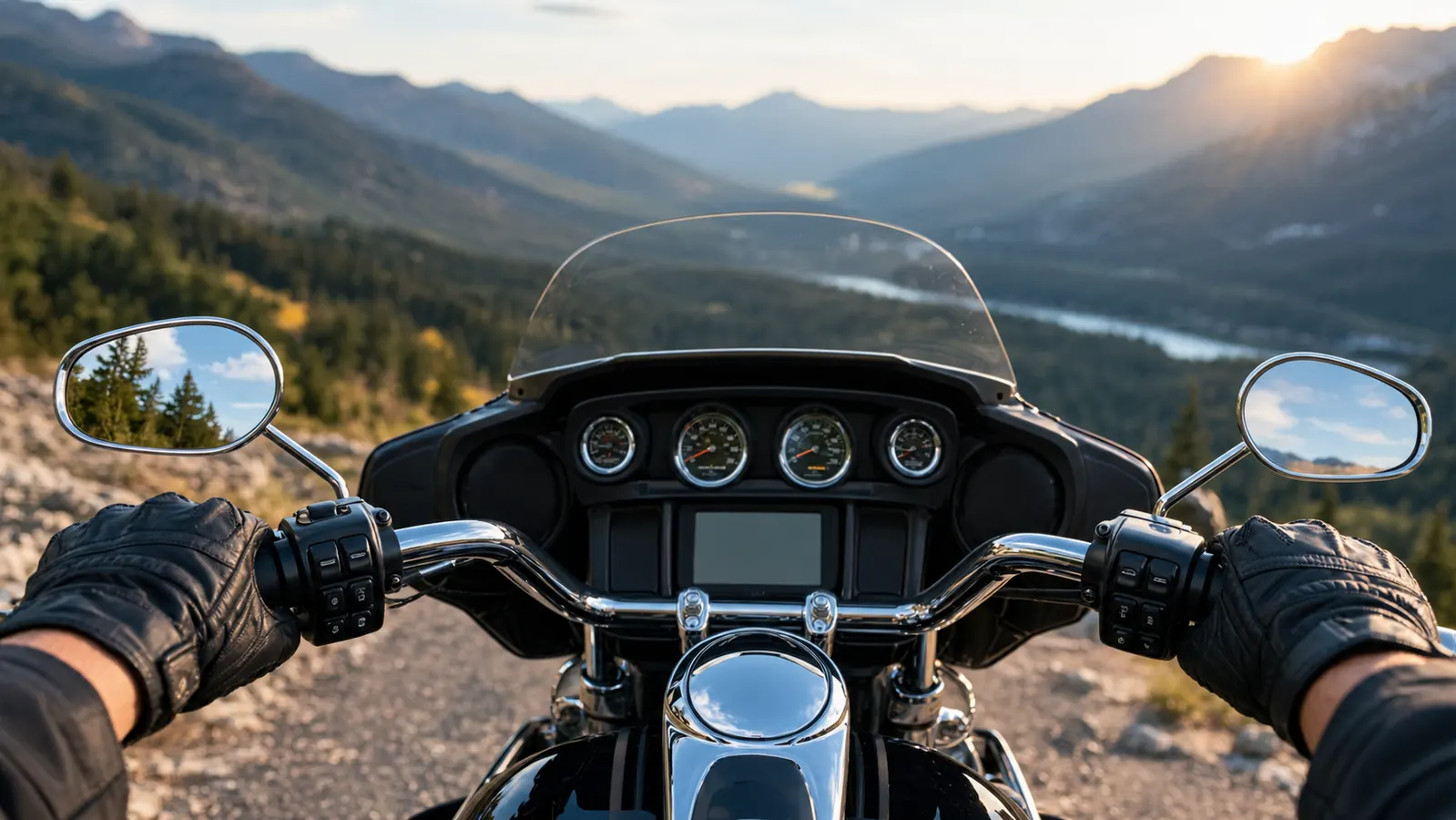
Ordering a motorcycle glove online is a gamble in a way that ordering a jacket is not. A jacket a size off means a flapping sleeve or a tight zipper, no more. A glove that comes up a size off means you feel it in every shift, every stop, every mile of a long afternoon, and you will think about it the whole way. I have been on two wheels for more than thirty years. I am 58, I live outside Bend, Oregon, and I ride a 2017 Gold Wing about 8,000 miles a year, mostly on Central Oregon highways and mountain passes. In all that time, the piece of gear I have seen riders get wrong most often is the glove. They nail the helmet, they fuss over the jacket, and then they grab whatever glove is on the shelf in their usual shirt size. This guide is how I size a pair of motorcycle gloves, and I use the Alpinestars SP-8 V3 as the example because it is the pair I reach for most of the riding season.
The SP-8 V3 is a short-cuff leather glove with a hard knuckle guard and a Velcro wrist closure, and it follows Alpinestars' standard sizing chart. The chart is easy to find, but it cannot tell you which of your hands to trust. My right hand has been a half size bigger than my left since my heavy-equipment mechanic days, so one glove always fits differently from the other, and that is normal, not a factory defect. The real answers come from a soft measuring tape, a piece of string, and a few honest questions about how and when you ride. Here are the five steps I use, in the order I use them.
Start with a glove that fits, not one you hope will break in
The Alpinestars SP-8 V3 carries a 4.7-star average across more than 1,200 reviews, and it is the pair I keep on the shelf for spring through fall. Check today's price on Amazon and pull up the sizing chart while you are there.
Amazon Check Today's Price on Amazon →Step 1: Measure the widest part of your palm, not your knuckles
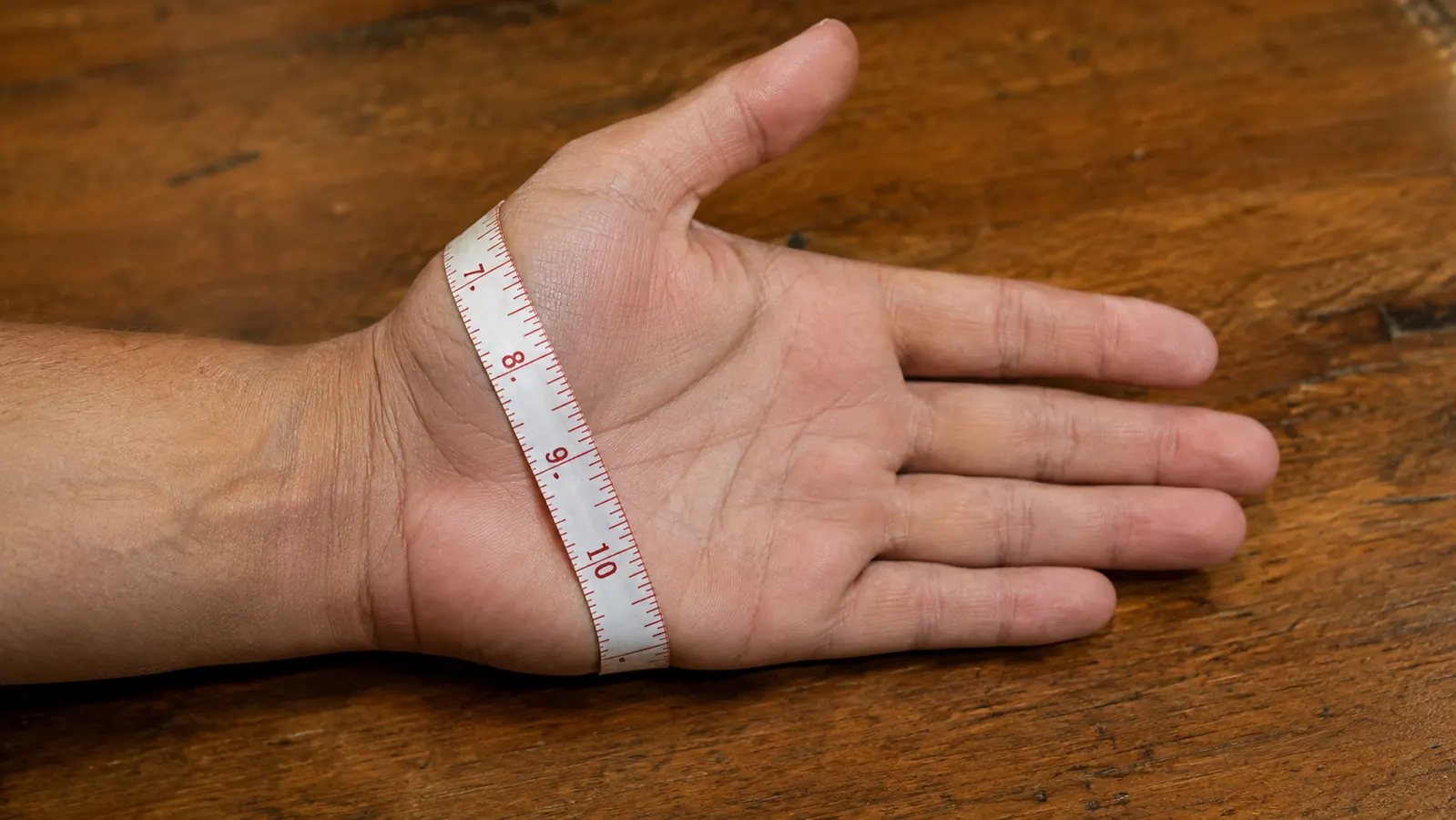
The Alpinestars glove chart asks for hand circumference, measured around the palm at its widest point, just below the knuckles. Wrap a soft measuring tape around that spot on your dominant hand, snug but not squeezing, and write down the number in centimeters. The chart lists metric ranges first, and the letter sizes, from small to XXL, hang off those ranges. Metric keeps you honest because it does not let you round up to your favorite size.
If you do not have a soft tape, use a piece of string. Wrap it around the same spot, mark where the ends overlap, then lay the string flat against a ruler. Measure twice. The first attempt is usually wrong because you are curling your fingers or clenching without noticing. Relax the hand completely, fingers together but not pressed into each other, and measure that relaxed palm.
My palm measures 21.5 centimeters relaxed, which puts me at the top of the Alpinestars large range, and the chart's finger-length column pulls me the same direction. Linda, my wife, rides pillion on our longer trips, and her measurement lands at a solid medium. The tape gives you a starting size, nothing more. You adjust from that starting size based on the next four steps, and most riders who skip the tape end up a full size off and blame the glove. It is rarely the glove.
Step 2: Compare finger length against your grip, not your flat hand
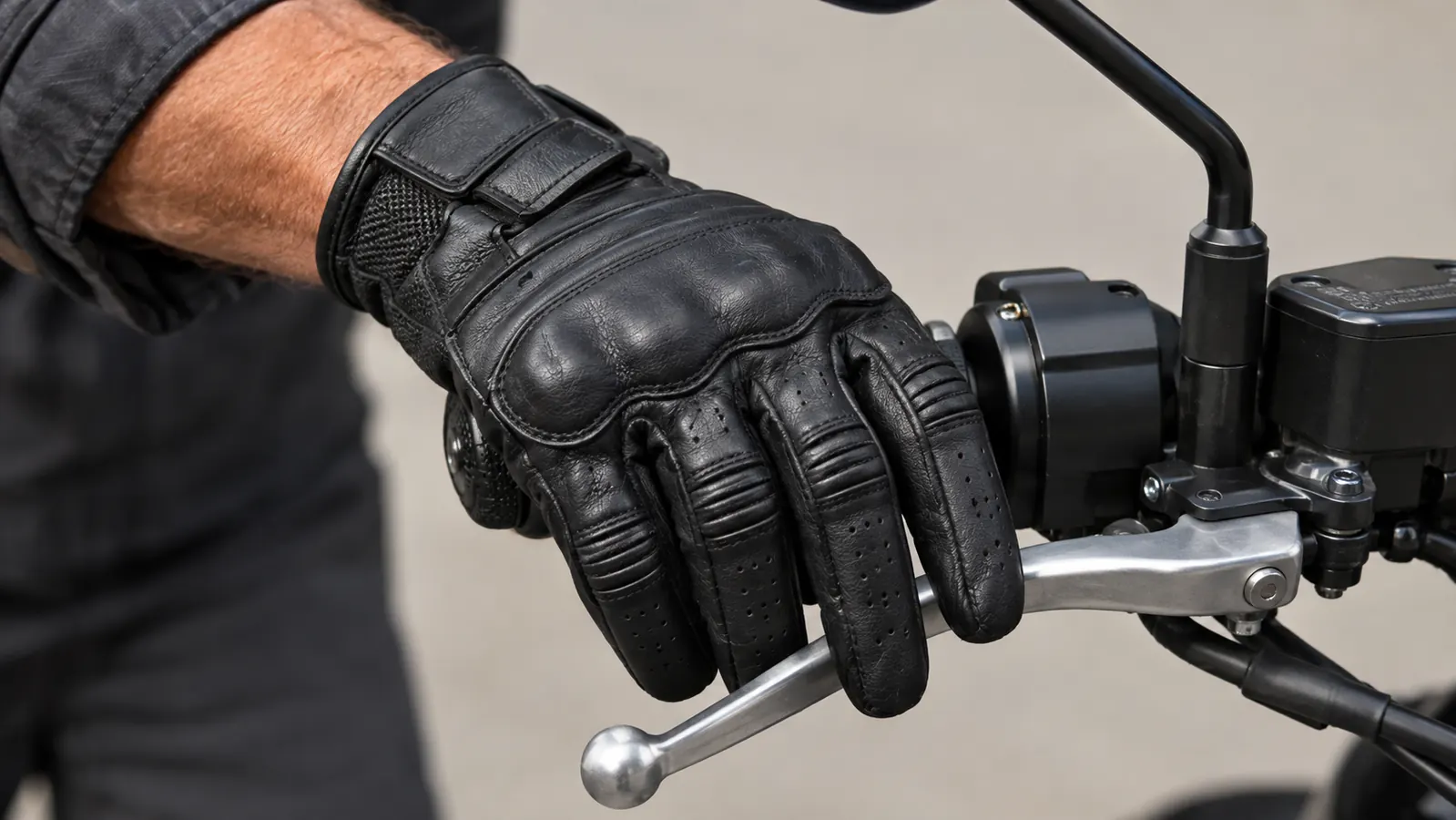
The SP-8 V3 chart also lists a finger-length range, measured from the crease at the base of your palm to the tip of your middle finger. That number matters more than the palm measurement for a glove with pre-curved fingers. The SP-8 V3 is cut with a mild curve that matches your hand on the grip, so a flat-hand test will lie to you. That pre-curve is why a glove that felt perfect in the store can feel wrong on the bars, and why the chart's numbers matter more than a quick try-on.
Nothing on a motorcycle asks you to ride with a flat hand. Sit on the bike, wrap your hand around the grip, and check where your fingertips sit inside the glove. You want a few millimeters of space between your fingers and the very ends of the glove. A fingertip that presses hard will go numb somewhere around mile forty. A fingertip that swims will fold over and bunch, which feels worse and pulls your attention off the road.
In my size large SP-8 V3, my middle finger sits about four millimeters short of the glove tip when my hand is on the grip. That is the window I aim for every time. If your fingers bottom out against the end of the glove, step up a size even if your palm measurement says otherwise. Palm and finger measurements disagree for plenty of riders, and when they do, finger length wins.
Step 3: Fit the palm so it moves with your hand, not against it
Slide the gloves on and make a fist. The leather across your palm should tighten into the shape of your hand, not pool into wrinkles you can pinch. If you can gather a fold of leather at the base of the palm between your thumb and forefinger, the glove is too big. If the leather strains against the palm even with your fingers relaxed, it is too small, no matter what the chart said.
The SP-8 V3 has a supple leather palm and a stiff knuckle guard, and the palm is the part that breaks in. A new glove should feel snug but not painful, because leather gives with use. I size for about ten percent snug on day one so the glove lands at one hundred percent after a few hundred miles. Riders who buy the pair that feels perfect in the driveway usually own a baggy glove by June. Give the leather a few rides before you judge it, but never count on a break-in to fix a glove that is tight across the knuckles.
Then check the wrist closure. The strap on the SP-8 V3 should hold the glove in place without the palm leather doing the work. I have seen riders buy a size too big and crank the strap down to compensate, which pinches the wrist and leaves the palm baggy. That combination is why they complain about the glove when the real problem is the size.
Step 4: Work every control on the actual bike before you decide
Put the gloves on and go sit on your motorcycle. Not the kitchen chair, the bike. Reach for the brake and clutch levers, roll the throttle, find the turn signal and the horn. You should feel the shape of each control through the leather without hunting for it. If the glove makes you search for the lever or forces you to grip harder to keep it in place, the size is wrong.
This is also where pressure points show up. The SP-8 V3 has a hard knuckle protector and a little padding at the heel of the palm. When your hand wraps the grip, neither piece should dig into you. A knuckle guard that presses on the knuckles instead of floating above them is a deal breaker, even if the rest of the glove is comfortable. You will feel that pressure on every mile of a long day.
Give yourself five minutes in this step. Work the controls with your eyes closed and ask three questions. Can I reach everything without looking? Does the glove move with my hand or against it? Can I still feel the temperature of the grip through the leather? A glove that feels fine in the store but off on the bike is off, period. Trust the bike, it has been honest longer than I have.
Step 5: Re-measure late in the day and decide on one thing
Hands swell through the day, and they swell more on a bike. Measure in the afternoon, after you have been up and moving, not first thing in the morning. If you measure before breakfast you will get a smaller number, and by mile fifty your gloves will feel tighter than they did in the driveway. The SP-8 V3 I wear is sized against an afternoon hand, not a morning one.
Decide whether you will wear a liner. I ride year round when the roads are clear, so my gloves are sized for bare hands or a thin liner on colder mornings. If you plan to run a liner, keep it next to the measuring tape and size for the liner, which usually means one size up in the palm. Liners change the fit more than people expect, so this decision has to happen before you order.
One last honest note. Alpinestars says the SP-8 V3 fits true to size, and for most riders it does. But my right hand is heavier than my left from thirty years of turning wrenches, so the right glove always runs snugger on me. If you sit exactly between two sizes, order the larger one and use the wrist strap for the final adjustment. A glove that is slightly loose at the heel of the palm is a nuisance. A glove that cuts off circulation at the knuckles is a hazard, and I will not ride with one.
What Else Helps
Fit is the foundation, but a few other details decide whether you actually wear the glove. Check the cuff length before you order. The SP-8 V3 is a short-cuff glove, so it does not tuck under a jacket sleeve the way a gauntlet does. I wear a touring jacket with long sleeves, and the short cuff works fine for me. If your jacket sleeves are short, you will have a strip of bare wrist in the wind, and that gets old fast on a mountain pass.
Ventilation is worth a look too. The SP-8 V3 has perforated panels at the fingers and knuckles, and on ninety degree afternoons in the Cascades that airflow is the difference between wearing the glove and leaving it on the seat. And the knuckle armor, the part I told you to check in step four, is what I would never trade away. Armor that does not sit where it should is armor you might as well not own.
One more thing I check before I order: how the glove feels when I close my hand around a real grip for a few minutes straight. Some gloves are fine at the counter and start to pinch along the edge of the hand after ten minutes. I keep a spare grip clamped to the workbench for exactly this test. If a glove complains in five minutes in the garage, it will complain for five hours on the road. And if it does not pass that test, keep looking. There is nothing wrong with you, a lot of otherwise good gloves simply run narrow.
A glove that is slightly loose at the heel of the palm is a nuisance. A glove that cuts off circulation at the knuckles is a hazard.
The short version is simple. Measure the widest part of your palm in centimeters, compare the finger length with your hand wrapped around the grip, make sure the palm fits snug across the whole hand, work every control on the actual bike, and re-measure after a full day on your feet. Do those five things and you will land the right size on the first order, which matters more with gloves than with almost anything else in your gear bag. I have thrown away more than one pair that was a size off over the years, and at this point I would rather take twenty minutes with a tape measure than spend another season fighting the wrong glove. A half hour with a tape measure beats a season of regret, and it costs nothing.
The size that has served me for thousands of miles
The Alpinestars SP-8 V3 in my measured size has been on my hands for most of the riding season, from spring passes to fall evenings. Check today's price on Amazon and measure before you order.
Amazon Check Today's Price on Amazon →