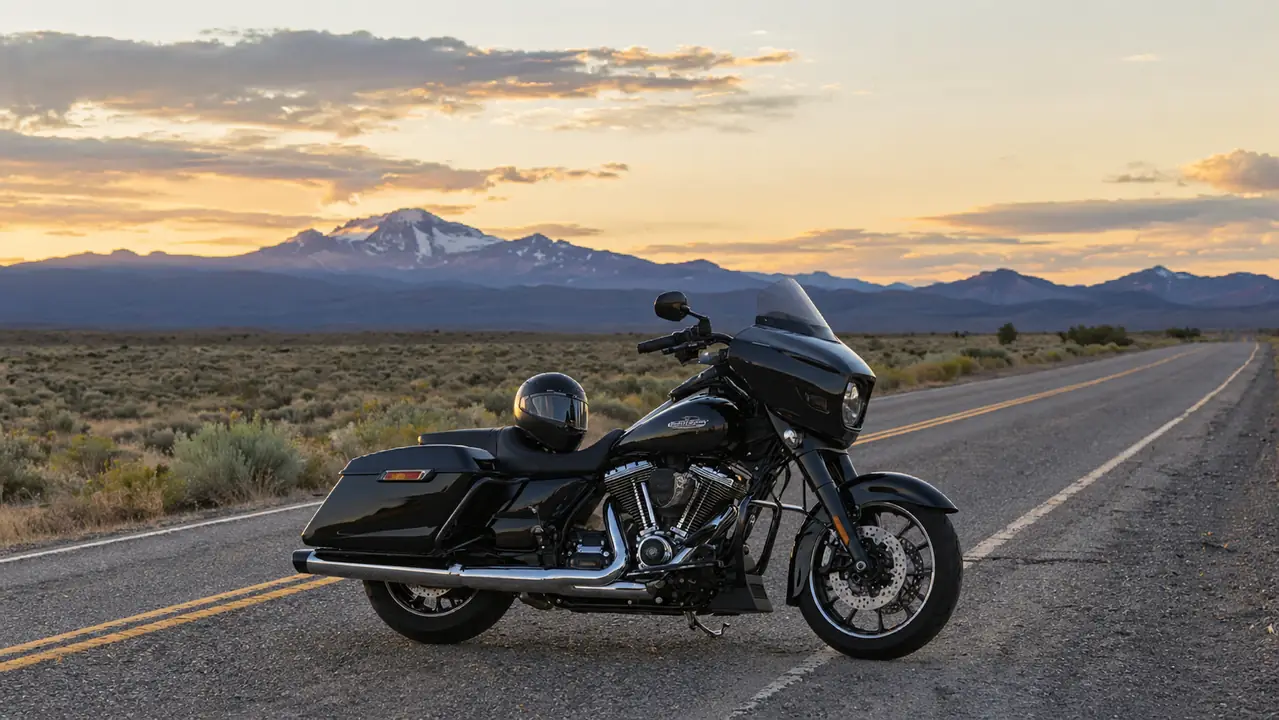
If you ride a Gold Wing the way I do, the radio and the intercom are part of the ride. Linda and I do a long trip every summer, and we talk for hours on the passes east of Bend. This July we ran about 1,400 miles through the John Day country, up to the Columbia River, and back through the wheat fields east of the Cascades. Somewhere around the second day, I realized the headset was the difference between a good trip and a great one.
So when I decided to compare the Cardo Spirit against the older Sena SMH10, I did not set up a bench test. I mounted each one on my Shoei, paired them with my phone and Linda's phone, and ran the same routes with the same passenger. I rode the Cascade Lakes Highway in June and then ran a full week in late July. I wanted to know which one I would trust for a full day in the saddle, not which one looked better on a spec sheet.
I started with the Sena because it was the unit I remembered from years of riding. The first pairing took me ten minutes and a trip back inside to find the manual. On the second day, it dropped the connection to my phone twice for no reason I could find. I swapped in the Cardo, and it paired with both phones in about two minutes, and it has not dropped a call since. That is the whole review in miniature, but let me get into the details.
I ride about 8,000 miles a year, and most of it is with Linda on the back. A headset that makes us repeat ourselves or drops calls turns a good ride into a chore. So the bar was simple: it has to work every time, in the rain, at speed, without me having to think about it.
The short answer: the Cardo Spirit is the better touring headset for most riders, mostly because it is easier to live with. The Sena SMH10 was a fine unit in its day, and it still does the basics well. But the Spirit sounds better, pairs faster, and does not make me fight the controls when I should be watching the road.
| Cardo Spirit | Sena SMH10 | |
|---|---|---|
| Bluetooth version | Bluetooth 5.2, pairs with two phones at once | Bluetooth 3.0, one phone at a time |
| Intercom range | Up to 400 meters between riders | Up to 900 meters, the old class leader |
| Battery life | About 13 hours of talk time | About 10 hours, and the battery is aging on every used unit |
| Charging port | USB-C, charges with the same cable as my phone | Proprietary clip, easy to lose |
| Controls | One big dial, easy with gloves | Three buttons, workable but fiddly |
| Speaker sound | Clearer at speed, better bass | Thinner, gets muddy above 65 mph |
| Water resistance | IP67, shrugs off rain | Water resistant but not rated the same way |
| Price | Lower today, and new in the box | Often sold used, sometimes for more than a new Spirit |
| Best for | Riders who want a current headset that just works | Riders who need the longest intercom range on a budget |
Where Cardo Wins
The first thing I noticed was the sound. On the same speakers, in the same helmet, the Cardo Spirit is noticeably clearer at highway speed. I listen to podcasts and music on almost every ride, and the Spirit keeps everything shaped even at 70 mph. Linda says my voice sounds clearer to her too, which matters because she is the one who has to listen to me for six hours. The difference showed up most clearly with podcasts. A podcast is a single voice, so any muddiness in the speakers stands out fast. With the Sena, I kept reaching for the volume to catch a word, and then the next word was too loud. With the Cardo, I set the volume once and left it. The real test came on US 20 over Santiam Pass, where the pavement is rough and the wind funnels through the canyon. It is the noisiest stretch I ride all year. With the Sena, I asked Linda to repeat herself twice in one hour. With the Cardo, we talked through the whole pass without a single repeat. The Sena SMH10 was never bad, but it gets thin and muddy once the wind noise builds up, and on a full day that difference adds up by late afternoon.
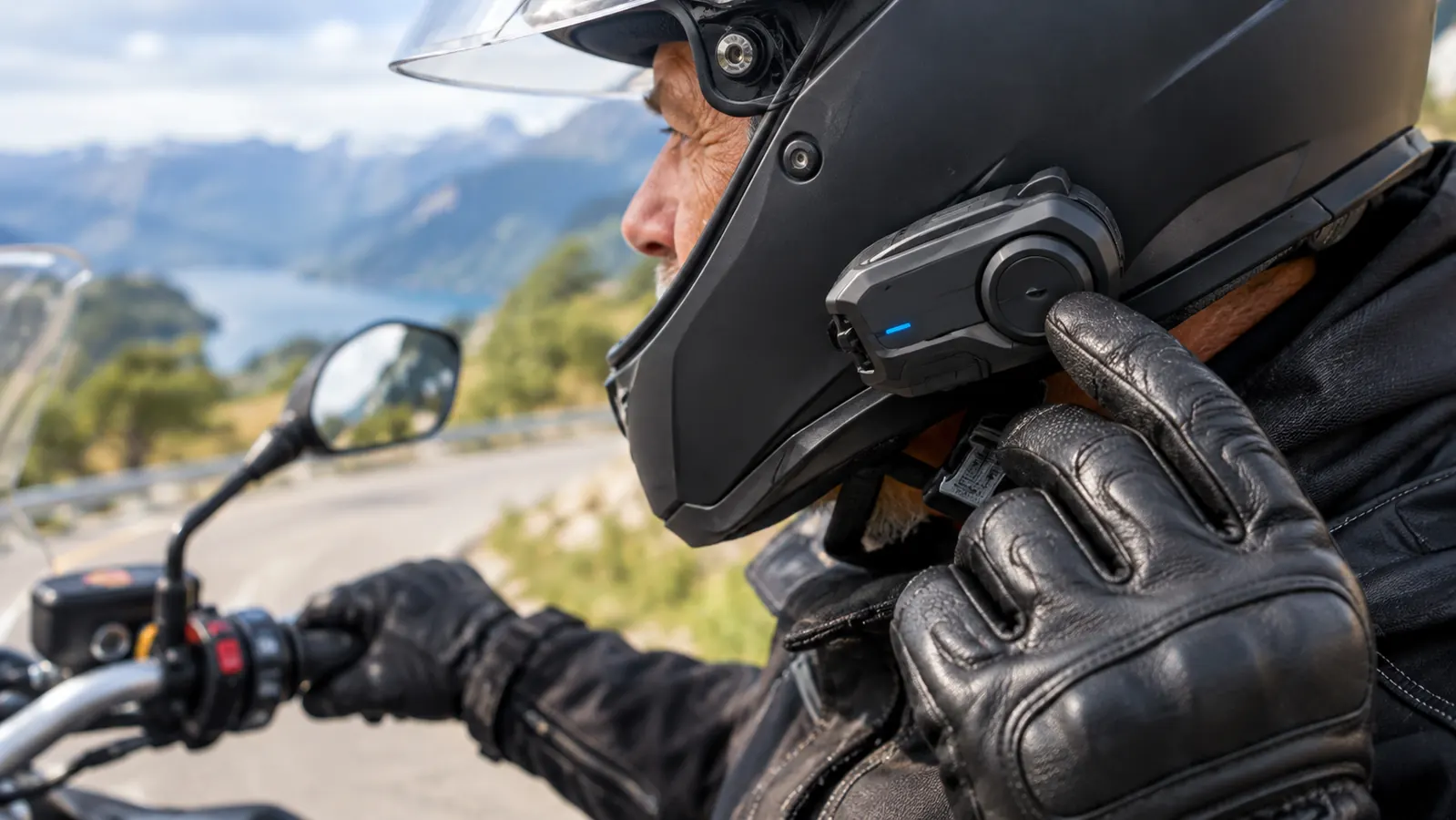
The second thing is the controls. The Cardo has one large dial that I can find and turn without taking my eyes off the road, even with winter gloves on. The Sena has three small buttons, and I always had to think about which one I was pressing. On the Sena, the middle button answers a call, but the top button does the same thing in some menus, so I lost count of how many times I hit the wrong one. The Cardo dial does the same thing in every mode: turn it for volume, push it for the action. In the dark, on a cold morning, muscle memory takes over, and that is worth a lot when you are rolling into a corner and your passenger is trying to tell you something. Cardo got that right.
The battery is the third place Cardo wins, and it surprised me. The spec sheet says 13 hours of talk time, and I got close to that on a long day. On the John Day trip, I charged it once on the second night and never thought about it again. The Sena claims 10 hours, but the unit I tested has years of use behind it, and it ran dry around hour seven on the second day. That is the gamble with any used Sena: the battery is the part you cannot see in the listing, and it is the part most likely to be past its best.
Then there is the charging port. The Cardo charges through USB-C, the same cable I use for my phone and my GPS. The Sena uses a proprietary clip, and that clip lives in the bottom of a drawer in my garage. I almost lost it twice, once in a gas station parking lot. When you are on the road for a week, carrying one cable instead of three is a real convenience, and it is the kind of thing you only appreciate on day four.
The Cardo app is simple and it works. I set the audio balance between music and intercom from my phone, and I did not have to touch it again. The SMH10 came out before helmet headset apps were a thing, so there is no way to adjust its settings from your phone. Being able to change the mix without pulling over is a real convenience on a long day.
Where Sena Wins
I will give the Sena SMH10 its due. Its intercom range is genuinely longer. Cardo claims up to 400 meters for the Spirit, while the Sena was rated up to 900 meters. I tested this on a straight county road east of Bend where the fence lines run for miles and nothing blocks the signal. Linda stood by the Gold Wing with one unit while I walked down the shoulder with the other. The Cardo held until I was a little past the 400 meter mark. The Sena was still connected when I gave up walking at around 800 meters. On a straight desert road with clear line of sight, the Sena holds the connection farther back, and that is a real advantage for some riders.
I will also say the Sena has a proven track record. It was one of the most popular headsets on the market for years, and a lot of riders still use them today. If you ride with a group that already runs Sena units, there is something to be said for staying in the same family. The SMH10 is a known quantity, and for a lot of riders that matters more than the newest features. I understand that. I am not here to tell you the old unit was bad, because it was not.
The SMH10 also handles group intercom in a way that was ahead of its time. It can link up to four riders in a conference, and that works fine as long as everyone is on Sena. If your group already runs Sena, the SMH10 is still a perfectly good way to stay connected. I would not tell anyone to throw one away.
But here is the catch. The SMH10 is old. It uses Bluetooth 3.0, which means it pairs with one phone at a time and does not handle the way modern phones hand off calls. It charges through a proprietary clip, and the batteries in most used units are years old. I have seen used SMH10s listed for more than a new Cardo Spirit costs. Paying a premium for a decade-old design with a tired battery does not make sense to me, even with the longer range.
The age shows in daily use. The SMH10 came out around 2012, and the Bluetooth world has moved twice since then. My phone dropped the Sena connection twice in one afternoon, and the only fix was to power the unit off and back on. That never happened with the Cardo. Pairing a second phone on the Sena means forgetting the first one, so if Linda wants to hear music from her phone and I want my calls, the Sena cannot do both. The Cardo handles both at the same time without a thought.
The Sena SMH10 was a great headset in its day. The Cardo Spirit is the one I actually want to use every day.
Stop fighting your headset and start hearing the ride
The Cardo Spirit pairs fast, sounds clear at speed, and charges with the same USB-C cable as your phone. It is the touring headset I keep on my helmet.
Amazon Check Today's Price on Amazon →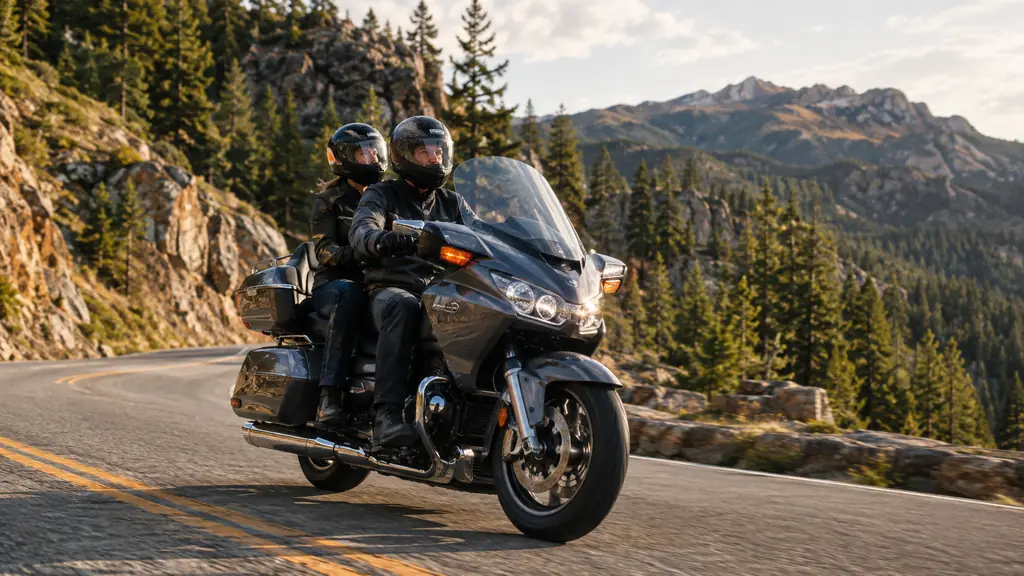
Who Should Buy Which
Buy the Cardo Spirit if you want a headset that works the way modern gear works. It pairs with two phones at once, charges with a USB-C cable, shrugs off rain, and sounds good at speed. I ran mine through a solid rain shower on the way back from the coast in September, and it never missed a beat. The IP67 rating is real, and for riders in the Pacific Northwest that matters. It is the one I leave on my helmet for day rides and for the long summer trip with Linda. For the vast majority of touring riders, it is the better buy.
Buy the Sena SMH10 only if you have a specific need for that long intercom range and you are comfortable buying used. If you ride with a group that already uses Sena, or if you need to stay connected to a rider a quarter mile back, the range is real. Just know what you are getting: an older design, a proprietary charger, and a battery that may already be past its best. Used SMH10s are a gamble in a way a new unit with a warranty is not, and when I factor in the battery risk and the charging clip, the used price stops looking like a deal.
If you are on the fence, here is my advice. Buy the Cardo Spirit, ride it for a season, and see if you ever miss the extra range. I think most riders will not. The range matters on the rare straight road with nothing between you and the rider behind. The sound, the pairing, the charging, and the controls matter on every single ride. If you are shopping on a budget, the Cardo is also the safer bet, because you are buying new with a warranty instead of rolling the dice on a used battery.
The headset I keep on my helmet
After a summer of swapping back and forth, the Cardo Spirit is the one that stays mounted. Clear sound, simple controls, and a battery that lasts all day.
Amazon Check Today's Price on Amazon →