
I have been riding for over thirty years, and I have owned helmets that cost three times what the Bell Qualifier costs. So when people ask me whether the Qualifier is actually good or just cheap, I do not answer from a spec sheet. I answer from the 4,200 miles I put on mine this season, riding a 2017 Gold Wing out of Bend, Oregon, through mountain passes and across high desert highways. The short version: the Bell Qualifier is a genuinely good helmet with a few honest flaws, and most of the complaints you read about it come from riders who bought the wrong size.
The Quick Verdict
The Bell Qualifier is the best value in full-face helmets I have tested in years. It is not the quietest or the lightest, but it fits well, vents properly, and carries a DOT rating at a price that lets you spend the rest of your budget on gear that actually matters.
Amazon Check Today's Price →A DOT-rated full-face helmet that does not punish your wallet
After a full season of commuting and mountain riding, the Bell Qualifier is still the helmet I reach for on an ordinary Tuesday. Check today's price on Amazon and see if your size is in stock.
Amazon Check Today's Price on Amazon →How I've Used It
I picked up the Bell Qualifier in early spring with the intention of using it as my everyday lid for the season. My Gold Wing is my only motorcycle, and I ride about 8,000 miles a year, mostly Central Oregon highways and mountain passes, with one longer trip each summer. That means the Qualifier has seen cold mornings in the high 30s, afternoon heat pushing 90, rain on the Cascade passes, and one memorable hailstorm east of Prineville.
I wore it for commuting into town, for a 400-mile loop through the Cascades, and for a week-long trip where Linda rode pillion and I wore the Qualifier every day. I did not treat it gently. It has been rained on, baked in the sun, and knocked over once in a parking lot. That is the kind of testing that reveals what a helmet is actually made of.
One note before the details: I wear a large in most brands, and the Bell sizing chart put me in a large as well. If you are between sizes, Bell runs a touch snug through the cheeks, so size up rather than down. A helmet that is too tight will never break in enough to be comfortable, and a helmet that is too loose is a safety problem, not a comfort problem.
I measured my head twice with a soft tailor's tape, once in the morning and once after a long day, because heads swell a little with heat and hours under a helmet. Both readings landed at the same spot on the chart, which gave me some confidence in the size I ordered. When it arrived, I wore it around the house for forty minutes before I ever started the Gold Wing, watching for hot spots on my forehead. That habit has saved me from keeping helmets that felt fine for five minutes and miserable after an hour.

What Nobody Tells You About the Fit
The first thing you notice about the Bell Qualifier is that the cheek pads are firm. Not uncomfortable, but firm. A lot of first-time buyers try it on in a store, feel that pressure, and assume the helmet is too small. It is not. The firm cheek pads are what keep the helmet from rotating on your head in a crash, and they soften noticeably after a couple of hundred miles.
What nobody tells you is that the break-in period is real. For the first two weeks, I could feel the pressure points when I wore the Qualifier for more than an hour. By the end of the first month, it felt like the helmet had molded to my head. That is normal for a polycarbonate shell with quality padding, but it means you should not judge the fit on a five-minute test in a store.
The test I used was simple. Every Saturday morning I rode the same 60-mile loop out past Sisters and back, and I paid attention to when I first noticed pressure on my cheeks. The first weekend it was about twenty minutes in. By the third weekend I did not notice it until I pulled into the driveway. By week four the pads had settled enough that I forgot about them completely, which is exactly where a helmet should land.
The other thing nobody tells you: the Qualifier runs slightly small through the crown. If you are right at the top of a size range, the helmet can feel like it is pressing on the top of your head for the first few rides. That pressure does ease as the liner compresses, but if you have a long oval head shape, you may want to look at a different shell shape entirely.
The firm cheek pads are not a flaw. They are what keep the helmet from rotating on your head in a crash, and they soften noticeably after a couple of hundred miles.
Ventilation: The Good and the Not-So-Good
The Bell Qualifier has a solid ventilation system for the price. The chin bar vent pulls air in and directs it across the inside of the shield, which helps with fogging. The top vents are easy to find and operate with gloves on, which is something I cannot say for helmets that cost twice as much. On a 90-degree afternoon on Highway 20, I could feel the air moving across the top of my head. That is not nothing.
The not-so-good part: the exhaust vents at the back are modest, so on a hot day the helmet does not dump heat as fast as a premium lid. It is not a sauna, but it is warmer than a Shoei or an Arai on the same ride. For a rider who only rides in summer, that is worth knowing. For the rest of us, it is a fair trade at this price.
Fogging is a mixed story. The shield has a decent seal, and the chin vent does help, but on a cold, wet morning I still had to crack the shield at stoplights. A Pinlock insert would fix that completely, and the fact that the Qualifier does not include one is my single biggest gripe about the helmet. You can buy an aftermarket Pinlock for it, and I would budget for that if you ride in damp weather.
What finally worked for me on cold mornings was cracking the shield to its first detent for the first few miles while the inside warmed up, then closing it once I was moving at highway speed. On mornings below about 40 degrees, even that was not enough, and I ended up riding with the chin vent wide open and my breath directed down. It is manageable, but it is a routine, and a rider who commutes in the dark through the winter will want an anti-fog insert sooner rather than later.
Noise: Set Your Expectations
Let me be direct: the Bell Qualifier is not a quiet helmet. At highway speeds on my Gold Wing, which has a decent windscreen, I measured the experience as noticeably louder than the premium helmets I have owned. You will hear wind noise, especially around the bottom edge of the shell. Earplugs are not optional with this helmet. They are required.
That said, the noise level is exactly what I expect from a polycarbonate shell at this price point. Premium helmets several price tiers up use composite shells and more elaborate padding to kill noise, and you are not paying for that here. If you already ride with earplugs, as every rider should, the noise is a minor issue. If you refuse to wear earplugs, this is not the helmet for you.
What surprised me is that the Qualifier is not noisy in a harsh way. It is noisy in a white-noise way. There is no sharp whistle, no buffeting around the ears, just a steady rush of air. That is much less fatiguing on a long day than a helmet with a whistle or a resonance at certain speeds.
The Shield and the Little Details
The shield on the Bell Qualifier is a genuine highlight. It is optically clear, with no distortion at the edges, and the ratchet mechanism is positive and easy to use with gloves. The shield also seals well against the gasket, which keeps rain out better than I expected. After an afternoon of steady rain on the way to Sisters, my face was dry and the inside of the shield was clear.
The quick-release shield system is simple: pull the two side levers and the shield pops off. That makes cleaning a two-minute job instead of a ten-minute puzzle. I have owned helmets where changing the shield required a screwdriver and a lot of patience. This is not one of them.
I swap between the clear shield and a tinted one depending on the season, and after a few dozen swaps the levers still click positively with no slop. I keep the spare shield in a soft cloth bag in the Gold Wing's trunk so it does not get scratched, and the swap takes less than a minute at a gas stop. One small tip: clean the shield pivot area with a damp cloth every few weeks, because road grit collects there and makes the mechanism feel gritty.
The D-ring chin strap is old-school but secure, and the strap is long enough to fasten without a struggle. The breath box and chin curtain are included, which is not always true at this price. The interior liner is removable and washable, and after a season of use it still looks good. The fabric is not plush like a premium helmet, but it has not worn thin or started to pill.
What the DOT Rating Actually Means
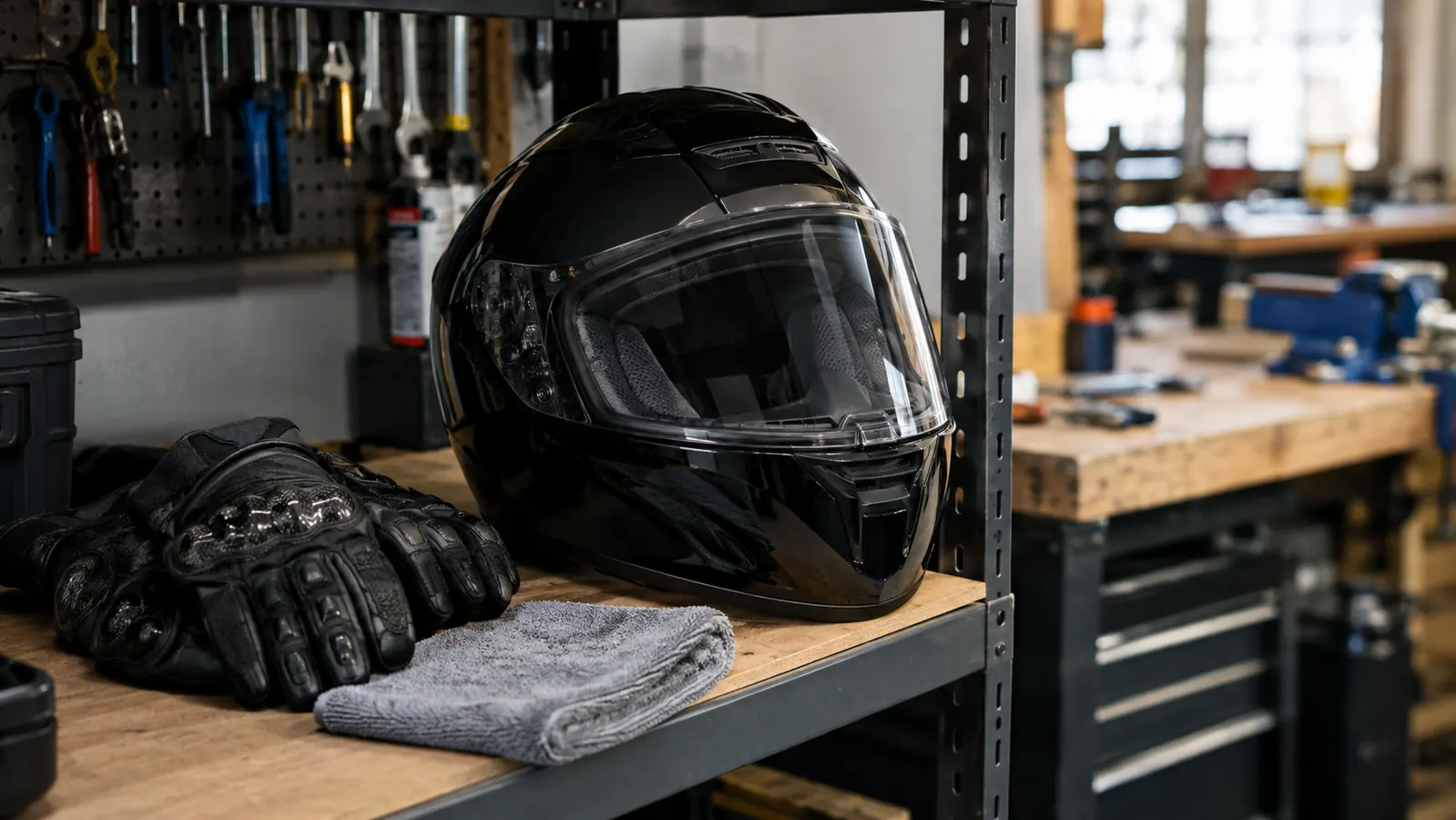
The Bell Qualifier is DOT certified, which means it meets the U.S. Department of Transportation standard for impact protection, penetration resistance, and retention. That is the legal minimum for street riding in most states, and it is not nothing. DOT certification is a real test, not a sticker. Bell has been making helmets for decades, and I trust their quality control more than I trust a no-name brand with the same sticker.
What the DOT rating does not mean is that the Qualifier is the safest helmet you can buy. It is not Snell or ECE rated, and it does not have the multi-density liner systems you find in premium helmets. If you are a track rider or you want the absolute highest level of protection available, you should look at a higher-tier helmet. If you are a street rider who wants a solid, certified helmet that fits your budget, the Qualifier is a legitimate choice.
I want to be careful here because I do not want anyone to read this as a promise that any helmet will keep you safe in a crash. No helmet can do that. What a helmet can do is reduce the risk of serious head injury, and the Bell Qualifier meets the standard that exists for exactly that purpose. That is the honest way to talk about it.
What I Liked
- Excellent value for a DOT-certified full-face helmet
- Firm cheek pads and secure fit once broken in
- Easy-to-use vents and a clear, distortion-free shield
- Removable, washable liner that holds up well
- Simple tool-free shield changes
Where It Falls Short
- Noticeably loud at highway speeds, earplugs required
- No Pinlock insert included, fogging on cold wet mornings
- Runs snug through the crown, size up if between sizes
- Warm on hot days, exhaust vents are modest
- Not Snell or ECE rated, premium protection costs more
Who This Is For
The Bell Qualifier is for the rider who wants a solid, DOT-certified full-face helmet without spending a week's pay. It is for the commuter who rides every day, the new rider buying their first real helmet, and the experienced rider who wants a spare for a passenger or a rainy day. It is for someone like me who believes the money you save on a helmet is better spent on boots, gloves, and a good jacket, because those are the things that keep you riding.
It is also for the rider who wears earplugs. If you already ride with hearing protection, the noise level of the Qualifier is a non-issue, and you get a helmet that fits well, vents well, and costs a fraction of the premium alternatives. That is a trade I make happily.
Who Should Skip It
Skip the Bell Qualifier if you ride in the rain a lot and do not want to buy a separate Pinlock insert. Skip it if you are between sizes and do not have a store nearby to try it on, because the snug fit is the number one source of returns. Skip it if you are a track rider or you want the absolute highest level of impact protection available, because there are better helmets and they cost more.
I would also skip it if you have an especially round head shape. Bell's internal shape suits my intermediate-oval head well, but Linda tried mine on in the garage and could feel pressure points at her temples within a minute. Head shape matters as much as size, and no amount of break-in will fix a shell that is the wrong shape for you. If you can, try one on at a dealer before you order.
And skip it if you refuse to wear earplugs. I am not going to soften this: every helmet is loud at highway speed, and the Qualifier is louder than most. Riding without hearing protection is a mistake no matter what helmet you wear, and if you are not willing to fix that habit, the money is better spent on a quieter premium helmet.
The Bottom Line
After a full season in the Bell Qualifier, I can tell you exactly what it is: a well-made, DOT-certified full-face helmet that delivers far more than its price suggests, with a few honest compromises. It is not the quietest helmet I own. It is not the coolest on a hot day. But it fits securely, vents properly, has a shield that works, and it has never given me a reason to doubt it.
If you are shopping for your first full-face helmet or replacing an old one on a budget, the Bell Qualifier deserves a serious look. Buy the right size, budget for earplugs, and consider a Pinlock insert if you ride in the wet. Do those three things and this helmet will serve you for years.
The right size is the whole game with the Bell Qualifier
Measure your head, check the Bell sizing chart, and order accordingly. Today's price on Amazon is worth a look before you decide.
Amazon Check Today's Price on Amazon →