

I have a simple rule for anything I strap onto my head: it has to earn its spot. I have ridden enough Central Oregon highways and mountain passes to know a helmet gets judged on a nine-hour day, not on a test ride around the block. So when a riding buddy asked which budget full face I would trust for touring, two names came up first: the Bell Qualifier and the HJC i10. I have put real miles on both, on my 2017 Gold Wing, and they are closer than you might think.
The short answer: if your touring means long days, real airflow, and swapping shields when the sun drops, the Bell Qualifier edges ahead. If you want the lowest entry price, the widest view through the shield, and a little less wind noise at highway speed, the HJC i10 is the smarter buy. On my trips, the Qualifier is the one that stays on the bike.
| Bell Qualifier | HJC i10 | |
|---|---|---|
| Price | Entry-level pricing; usually the pricier of the two by a few dollars | Entry-level pricing; typically the cheaper ticket into a full-face helmet |
| Shell material | Polycarbonate composite shell | Advanced polycarbonate composite shell |
| Weight | About mid-3-pound range, light enough for all-day wear | Similar weight, also light enough for all-day wear |
| Ventilation | Velocity Flow system with chin, brow, top vents and rear exhausts; moves real air on hot climbs | ACS channeling that handles commuting fine but flows less at highway speeds |
| Shield field of view | Standard opening; you will not feel boxed in | Wide eye port that makes mirror checks and head checks easier |
| Shield changes | ClickRelease tool-less swap and a factory anti-fog coating on the shield | RapidFire tool-less swap, but no anti-fog coating from the factory |
| Fit shape | Intermediate oval that suits most heads | Rounder interior built for round-oval heads |
| Noise at highway speed | Wind noise is noticeable at 70; typical for this class | A bit quieter at cruise in most reviews, with a snugger neck roll |
| Touring extras | Padded wind collar and speaker pockets for a headset | Speaker pockets, but no padded wind collar |
| Built-in sun visor | None; you swap shields or wear sunglasses | None; same deal |
| Best for | All-day rides where airflow and quick shield swaps matter | Budget commutes and first-time full-face buyers |
Why These Two, Not Something Fancier
It is easy to spend three times as much on a helmet, and there are days I understand why. Premium lids are quieter, lighter, and packed with conveniences like built-in sun visors. But a lot of riders, including me for most of my years on two wheels, are shopping in the budget row, and the question is not whether the cheap helmet is as good as the expensive one. It is not. The question is which budget helmet gives you the most of what touring actually demands.
The Bell Qualifier and the HJC i10 sit in the same price neighborhood and go after the same rider: someone who wants a certified full face that fits well and does not fall apart after a season. Both have been around for years, both have thousands of reviews, and both have earned a reputation you can actually check. That is why they keep coming up in the same conversation.
How I Put Miles on Both
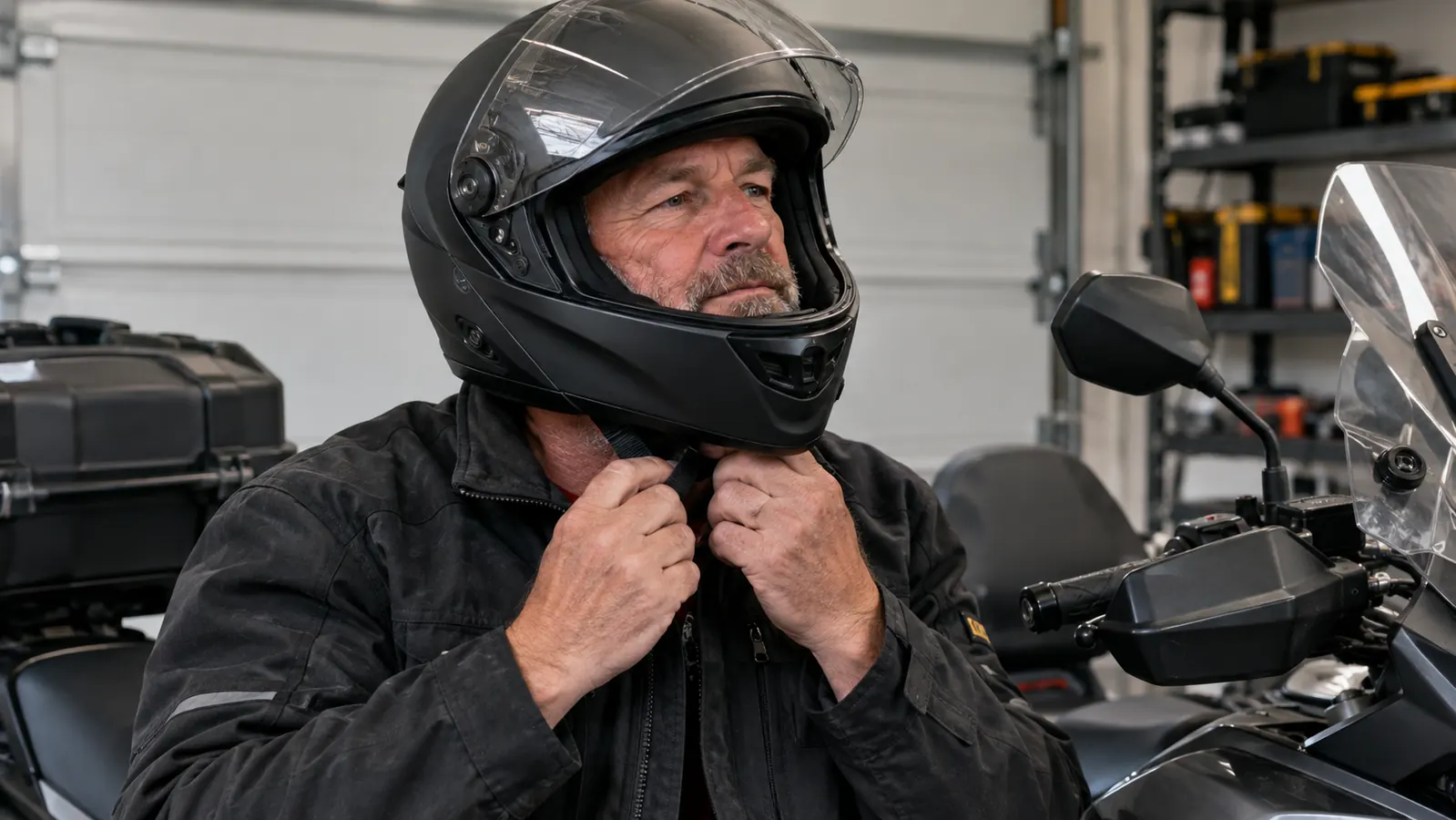
I spent most of last season riding the Qualifier, then switched to the i10 for a stretch of commutes and a weekend loop through the Cascades. Same bike, same roads, same helmet size, and I kept notes on the things that actually matter on tour: airflow, noise, how easy the shield is to deal with at a gas stop, and how the liner feels at hour six. I logged right around 4,000 miles in the Qualifier before I swapped, and another 1,500 or so in the i10. That was enough for the differences to stop being opinions and start being patterns. I did not dyno them. I just wore them, which is the only test that counts.
One thing worth saying up front: both of these are entry-level full-face helmets with polycarbonate shells, and neither one is a premium touring lid. They meet the same safety standard, they fit snugly when you size them right, and they will do the job. The difference is in the details, and on a long day those details add up.
I should also say what I did not do. I did not drop either helmet, I did not race either helmet, and I did not take either one off road. This is a road test, on pavement, at legal speeds, on the kind of rides you and I actually do. That is the honest frame for everything below.
Where the Bell Qualifier Wins
The Qualifier's airflow is the reason it wins the long-day argument. The Velocity Flow setup pulls air through the chin vent, across the brow, and out the rear exhausts, and you can feel it. Coming up out of the gorge on a hot afternoon, with Linda on the back, the Qualifier has kept my head noticeably cooler than the i10 does in the same conditions. The i10 is not a hot box. It just moves less air at speed, and speed is exactly when you need it.
The second win is the shield. The ClickRelease system lets me pop the side plates and swap shields in under a minute, which matters when I leave Bend at dawn with a clear shield and ride home into a low sun. The shield also carries an anti-fog coating from the factory, so I make fewer stops to wipe the inside on cool mornings. Add the padded wind collar, which settles against the back of the neck and trims some of the rumble that finds its way under the shell, and you have a helmet that was clearly thinking about long rides when it was designed. I will add one more small thing, because it is the kind of detail you only notice at the end of a long day: the chin curtain. The Qualifier's chin curtain snaps in place and stays put, and it does more to cut the draft around the neck than you would expect from a piece of fabric. The i10 has a curtain too, but it is a looser fit and tends to flop out of place when I take the helmet off at a rest stop.
Where the HJC i10 Wins
I am not going to pretend the i10 has no strengths, because it does. It is usually the cheaper of the two, which matters if you are buying your first full face or outfitting a second rider. It also has the better view. The eye port on the i10 is genuinely wide, and on the Gold Wing, where you sit upright and high, that extra window makes lane checks easier. I noticed it the first time I rode with it, and I noticed it again every time I came back to it.
The i10 is also a little quieter at cruising speed in most reviews, and my own notes agree. The neck roll sits snugger, and there is less of the hiss the Qualifier lets in around the base. I would not call either helmet quiet. If silence is your priority at this price, you are looking at the wrong category. But between these two, the i10 asks less of your ears on a long interstate stretch. It is also worth saying that the i10's shield throws less distortion at the edges. On a clear afternoon, looking through the i10 at the road ahead feels like looking through a clean window. The Qualifier is fine, but the i10 has the edge in optical clarity, and that is a quiet comfort you stop noticing only because it never becomes a problem.
For all-day rides, the Bell Qualifier earns its spot on the bike
If your touring looks like mine, with 400-mile days and afternoon heat, the Qualifier's airflow, tool-less shield swaps, and wind collar make it the better traveling companion. Check today's price on Amazon to see if it fits your budget.
Amazon Check Today's Price on Amazon →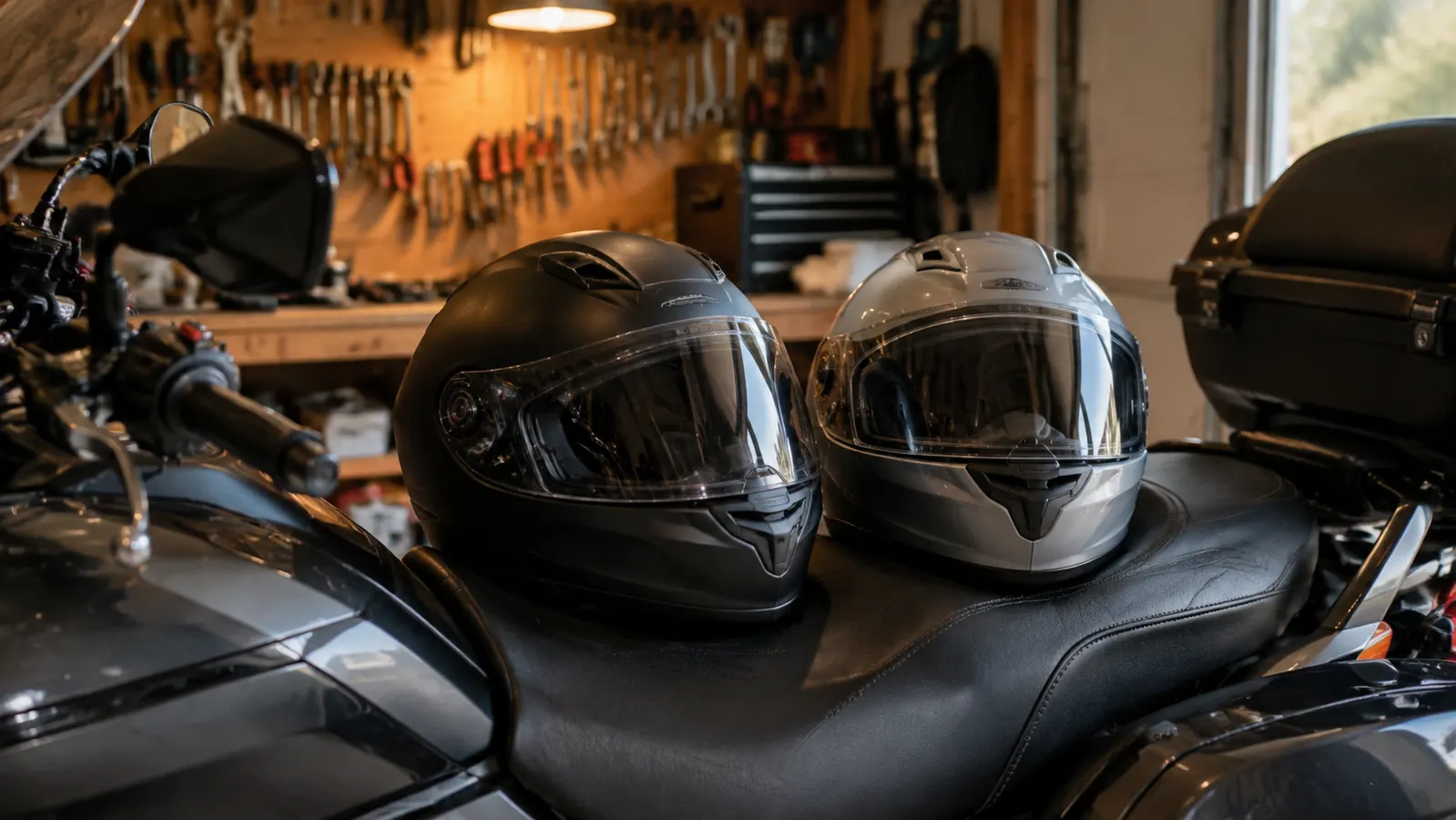
Fit and Sizing: The Part Nobody Can Decide for You
Here is where I have to stop being helpful and start being honest: fit matters more than any feature on this page. The Qualifier runs an intermediate oval shape, which is Bell's middle ground, and it suits most heads. The i10 is rounder inside, which is great if you have a round-oval head and a problem if you do not. I measured my head and tried both in the same size, and the Qualifier settled in with the right pressure on my cheeks and no hot spots across the forehead. That is the test you need to run, not my word for it.
Measure your head with a cloth tape and order the size that matches. Then be honest about how it feels after twenty minutes, not two. A helmet that feels fine in the store will tell you the truth by mile fifty. If you are between sizes, go with the snugger fit, because the liner packs down over the first month and a loose helmet is a dangerous one. Both of these helmets come with removable, washable liners, which is another small touring comfort, because nothing ruins day three of a trip like a liner that smells like day three of a trip.
One more fit note: wear the helmet for a solid hour indoors before you commit to it. A pressure point that starts as a dull ache at minute twenty will be a headache by mile one hundred. I have had helmets pass the five-minute test and fail the afternoon test, and the Qualifier was one of the rare ones that passed both. Do yourself the same favor.
Who Should Buy Which
I would send a first-time buyer to the HJC i10 without hesitation. It costs less, the view is wide, and it does everything a new rider needs while they figure out what they actually want. I would send the touring rider to the Bell Qualifier, because touring is a string of small comforts stacked over ten hours, and the Qualifier stacks more of them. My own setup says it plainly: the Qualifier is the helmet that lives on the seat of my Gold Wing when I head out of Bend for the weekend.
If you are still torn, ask yourself one question: what does your riding actually look like? If it is twenty-minute hops to work and the occasional Saturday loop, the i10's lower price and wider view win. If you plan your vacations around a tank bag and a map, the Qualifier's airflow and shield system will earn their keep by lunchtime on day one. I have been that second rider for thirty years, and I know which one I reach for.
The i10 is the better deal. The Qualifier is the better traveling companion. On a tour, I know which one I want.
Three Things I Learned After a Full Season With Both
First, the liner is the first thing to go. Both of these helmets ship with removable, washable liners, and you have to use that feature. A helmet worn every day without a liner wash starts to smell by week three, and no amount of air freshener fixes it. I wash the liner in both of mine every couple of months, and it keeps a budget helmet feeling like new.
Second, the shield will scratch eventually, and that is fine. A scratched shield is not a safety problem, it is a visibility problem, and it is why I like the Qualifier's easy swap. When the shield on the i10 picked up a scratch, I lived with it longer than I should have, because the change was slightly more fiddly. That is a small thing until it is a glare thing on a sunny afternoon.
Third, buy the right size and stop there. A helmet that is too big is dangerous, because it can shift in a crash, and a helmet that is too small is miserable, which means you will stop wearing it. Follow the manufacturer's sizing chart, measure twice, and remember that the liner will pack down about half a size in the first month. When in doubt, go with the snugger fit, because it will not stay snug for long. And if you are buying for the first time, order from a place with a simple return policy. Sizing a helmet by a chart is an estimate, not a guarantee, and the helmet that fits you is the one that feels right after an hour, not the one that matches the number on the tape.
The Bottom Line
Both of these helmets will protect your head, and both will get you home, which is the part that actually matters. The HJC i10 wins on price, visibility, and a little less noise. The Bell Qualifier wins on airflow, shield convenience, and the touring details that show up at hour six. If you ride mostly short hops around town, save the money and take the i10. If you ride like me, with a full tank and no particular plan, the Bell Qualifier is the one I would put on, and the one I do put on, every time I roll out of the driveway.
Still deciding? Start with the helmet that thinks in miles
The Bell Qualifier is built for the rider who eats up miles and wants a helmet that keeps up. See today's price on Amazon and read the recent reviews before you decide.
Amazon Check Today's Price on Amazon →