
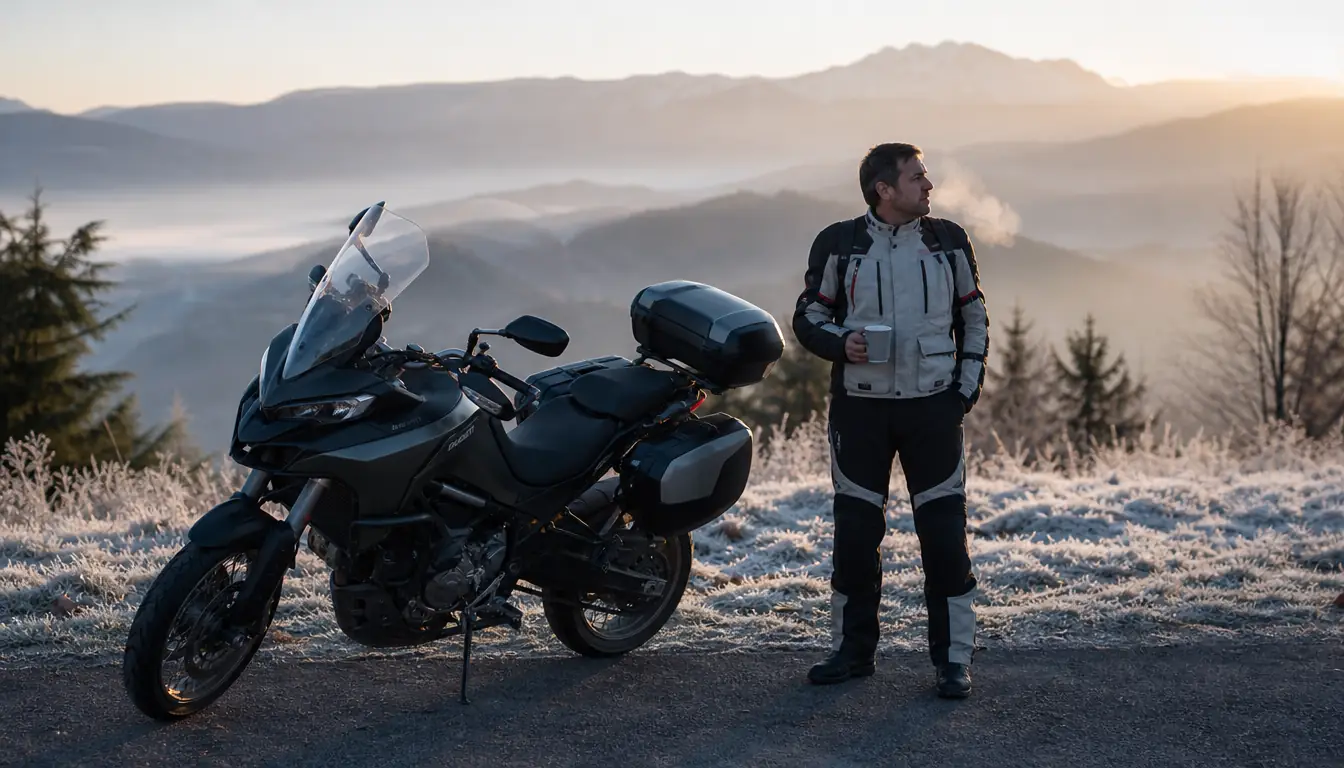
Bend, Oregon, in late October. The thermometer on the garage wall reads 36 degrees at 6:40 in the morning, and the seat of my 2017 Gold Wing has a thin skin of frost on it. I have ridden through a lot of cold mornings in the thirty-plus years I have been on two wheels, and the one lesson that sticks is this: the jacket is the center of the whole system. Everything else, the base layer, the liner, the neck gaiter, is built around getting that outer shell right.
The Joe Rocket Atomic 5.0 is the shell I reach for when the forecast says cold and clear. It is a textile touring jacket with a waterproof breathable membrane, a zip-out thermal liner, and CE-rated armor in the shoulders, elbows, and back. But the reason it works for cold morning rides is not any single feature. It is how the whole thing layers together, and that is what this guide is about. I spent a couple of winters working out a system that gets me through a 40-degree outbound leg without shivering and without overheating on the way home.
Start with a shell that blocks the wind, then build the layers around it
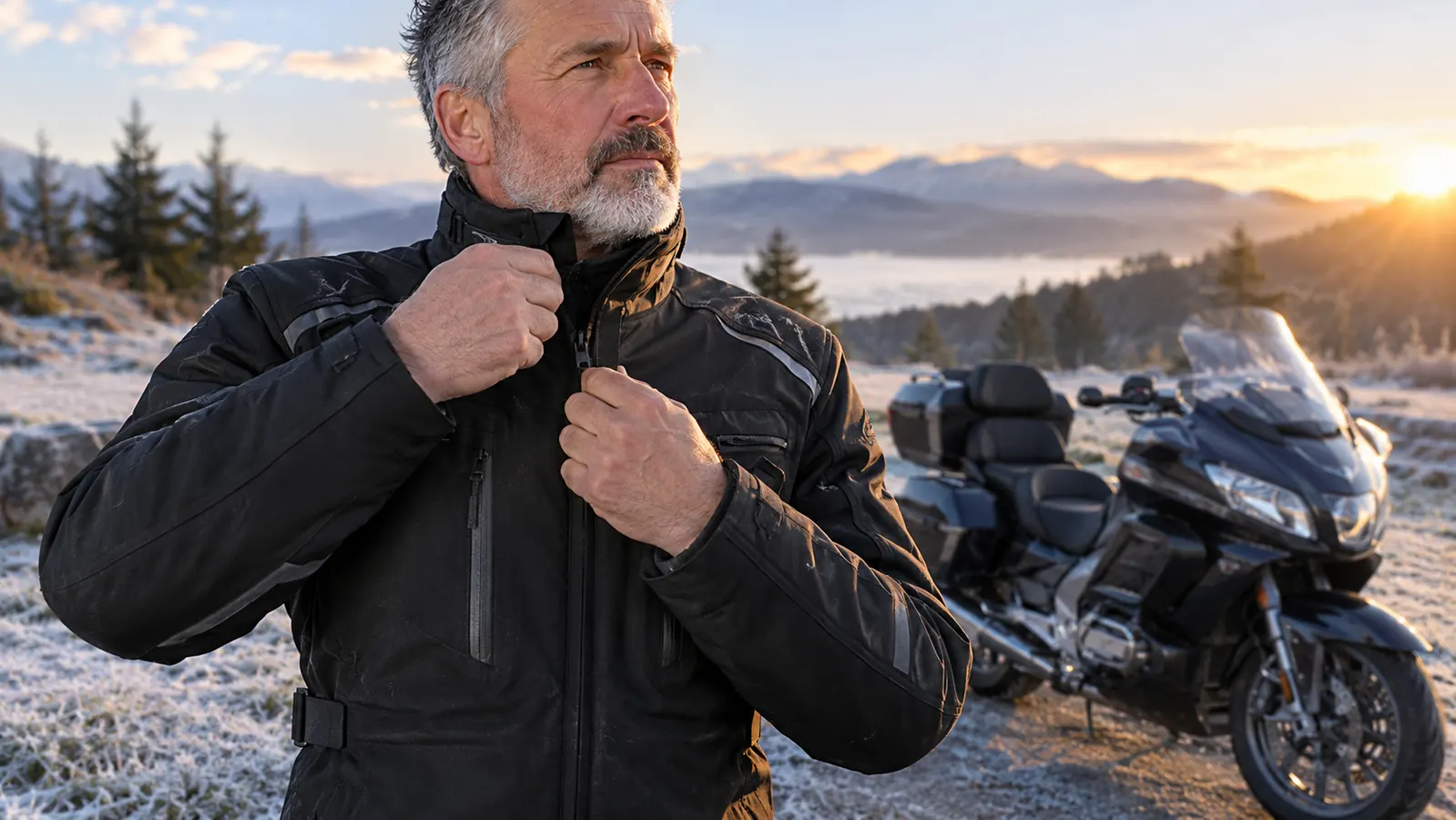
The Joe Rocket Atomic 5.0 is the base of the system I describe below: a waterproof, breathable textile shell with a thermal liner and CE-rated armor that leaves room for the layers underneath.
Amazon Check Today's Price on Amazon →Step 1: Start with a windproof shell
At 65 mph, wind chill is not a small thing. A 40-degree morning feels like the high 20s once you are moving, and no amount of insulation underneath will save you if the wind is cutting straight through your outer layer. That is why I start every cold-weather system with the jacket itself. The Joe Rocket Atomic 5.0's outer shell is a heavy nylon weave with a waterproof and breathable membrane underneath it, and it stops the wind cold. That is the job of the outer layer: seal the wind out so the warmth your body makes stays where it belongs. The membrane is the same kind of waterproof, breathable construction you see in rain gear that costs more, and it breathes well enough that I never feel like I am riding inside a plastic bag.
The jacket has a full front zipper with a storm flap over it, which matters more than people think. On a cold morning, a zipper that leaks air down the middle of your chest will undo everything else you did right. The Atomic 5.0 also has hook-and-loop adjusters at the waist and the forearms, so I can cinch it down and keep the shell from ballooning at speed. When the wind is not moving around inside the jacket, the layers underneath do their job.
I will be honest about one thing: this jacket is not a heavyweight winter parka. It is a three-season touring jacket, and on the very coldest days I ride, the low 20s, I want more insulation in the mix. But for the 30s and 40s, which is most of my cold-weather riding here in Central Oregon, it is the right amount of shell. You build the warmth with the layers underneath.
Step 2: Use the thermal liner as your adjustable middle layer
The Atomic 5.0 comes with a quilted thermal liner that zips in and out. I treat it as the system's thermostat. Below about 45 degrees, the liner stays in. Above that, or on a ride that starts cold and warms up by noon, I pull it out before I leave and stash it in the tail bag. The liner is the difference between a jacket that is comfortable at 35 degrees and one that is only comfortable at 50. Because it is quilted, it traps a layer of still air against the shell, and still air is what insulation actually is.
The trick is to decide before you leave, not at the first gas stop. Ripping the liner out on the side of the road is awkward, and putting it back in with cold, stiff fingers is worse. I check the forecast for the warmest part of the ride, not just the coldest. If the outbound leg is 38 and the return leg is 55, the liner comes out and the base layer carries the extra warmth. If the whole ride stays under 45, the liner stays in and I skip the heavier base layer.
One detail worth knowing: the liner zips in at the cuffs and the collar, and if you rush it, the sleeves twist. I learned that the hard way on a ride to Prineville, and I spent the next hour with a bunched-up sleeve liner. Take the extra minute at home, run your arm down the sleeve, and make sure the liner lies flat. It makes a difference you feel immediately.
Step 3: Put a thin base layer underneath, never cotton
Here is the mistake almost everybody makes on a cold morning ride: they reach for the thickest sweatshirt they own. I did it for years, and it fails every time, because cotton holds sweat. You generate a surprising amount of heat inside a textile jacket even in cold weather, and the moment you stop moving, that damp cotton goes cold against your skin. A damp base layer is worse than no base layer, because it pulls heat off your skin. You end up colder at mile 30 than you were at mile 10.
What works better is a thin synthetic or merino base layer under the liner. On a 40-degree morning, I wear a lightweight merino crew and nothing else under the jacket. On the colder mornings, down around freezing, I switch to a slightly heavier grid fleece. Both of them pull sweat away from the skin and dry fast, and because they are thin, they do not bunch up under the armor or make it hard to move your arms.
The Gold Wing has a big fairing and a tall windshield, so my torso does not take the full blast of the wind. If you ride a naked bike or a standard, you may want to add one more thin layer in the same material. The principle stays the same: thin, wicking layers beat one thick cotton layer every time.
Step 4: Close the gaps at your neck and wrists
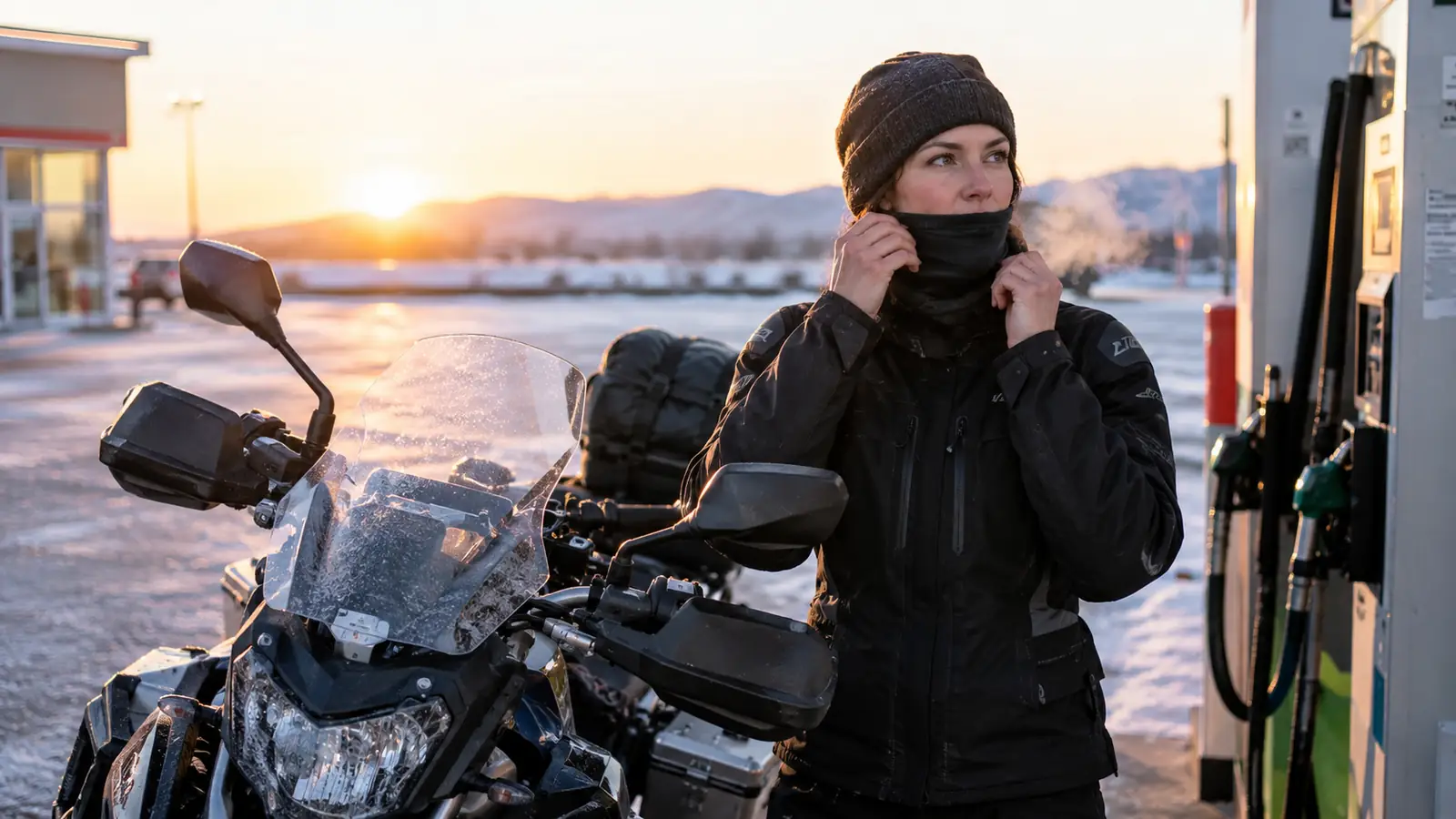
A jacket can be perfect and you will still freeze if the cold air is pouring in at the neck. The Joe Rocket Atomic 5.0 has a tall collar with a snap closure, and it seals well against the bottom of a helmet, but on the coldest mornings I add a thin neck gaiter. I pull it up over my chin and tuck the top edge under the helmet skirt, and the combination closes that gap completely. A simple neck gaiter has done more for my cold-weather comfort than any single upgrade I can think of.
The wrists are the other leak point. The Atomic 5.0's cuffs close with hook-and-loop and a zipper, and I run the cuff over the gauntlet of my gloves, then cinch it down. That overlap keeps the wind off the wrists, where the skin is thin and the cold bites fast. On mornings in the 30s, I wear insulated gauntlet gloves, and the jacket cuff closes over the top of them cleanly. If you ride without gauntlets, a pair of rain cuffs or a longer glove gauntlet does the same job, but the overlap has to be there.
This is also where I think about the armor. The Atomic 5.0 comes with CE-rated armor in the shoulders, elbows, and a back pad, and none of the layering I do changes how it fits. That is the point of building the system around the jacket instead of stuffing layers under a jacket that is already tight. The armor stays where it is supposed to be, which matters more than any comfort feature on a cold ride.
Step 5: Test the whole system on a short loop before you trust it
Do not find out your layering is wrong 60 miles from home. When I switch to cold-weather gear for the season, I take a short test loop first, maybe 15 or 20 miles, and I pay attention to three things: where the cold leaks in, where I am sweating, and how the jacket feels when I reach for the controls. I keep the test loop on back roads where I can stop safely and take a glove off to adjust things without traffic rushing past. The first ride of the season almost always teaches me something, and it is better to learn it close to home.
On the test loop, I check the obvious spots: the collar, the wrists, the small of the back, where a jacket can ride up over the waist of your pants. I also check the opposite problem, overheating. If I am sweating at a stoplight, I know the system is too warm for the ride ahead, and I adjust before I get on the highway. A system that keeps you comfortable at speed but soaks you at a stoplight is a system that will leave you shivering on the way home.
The last thing I check is the forecast for the return leg. In the fall here, the difference between 6:40 in the morning and noon can be twenty degrees. I have made the mistake of dressing for the morning and roasting on the way back, and I have also made the opposite mistake. A quick look at the forecast on my phone before I suit up is enough; I do not need a full weather briefing. The jacket's liner is the fastest way to adjust the whole system, which is why I treat it as the main dial and leave the base layer alone.
What Else Helps
A few things beyond the jacket itself make cold mornings easier, and none of them are expensive. A windshield and fairing, like the Gold Wing has, take a huge amount of wind off your torso, which means your layers go further. Heated grips are worth considering if you ride a lot of cold mornings, and a good pair of insulated gauntlet gloves covers most of what I need down into the 30s. I also keep a thin rain layer in the tail bag, because a waterproof jacket keeps you dry, but a rain shell over everything is the difference between a dry 45-degree ride and a damp, miserable one if the forecast lies. I pair the jacket with textile overpants on the coldest mornings, because the gap between the jacket hem and my waist is where a lot of heat escapes.
The other thing that helps is habit. I keep my cold-weather gear in one place, and I lay it out the night before: base layer, gaiter, gloves, and the liner decision made the night before based on the morning forecast. When the alarm goes off at 5:45, I am not making decisions. I am just putting on what is already laid out, and that is worth more than any piece of gear.
At 34 degrees and 65 mph, with the liner in and a thin merino layer underneath, the only part of me that complained was my fingertips.
Build your cold-weather system around a shell that layers right
The Joe Rocket Atomic 5.0 is the jacket I reach for when the mornings turn cold. Textile shell, waterproof membrane, thermal liner, and CE-rated armor in one package that layers cleanly. See today's price on Amazon, and read the long-term review before you decide.
Amazon Check Today's Price on Amazon →